
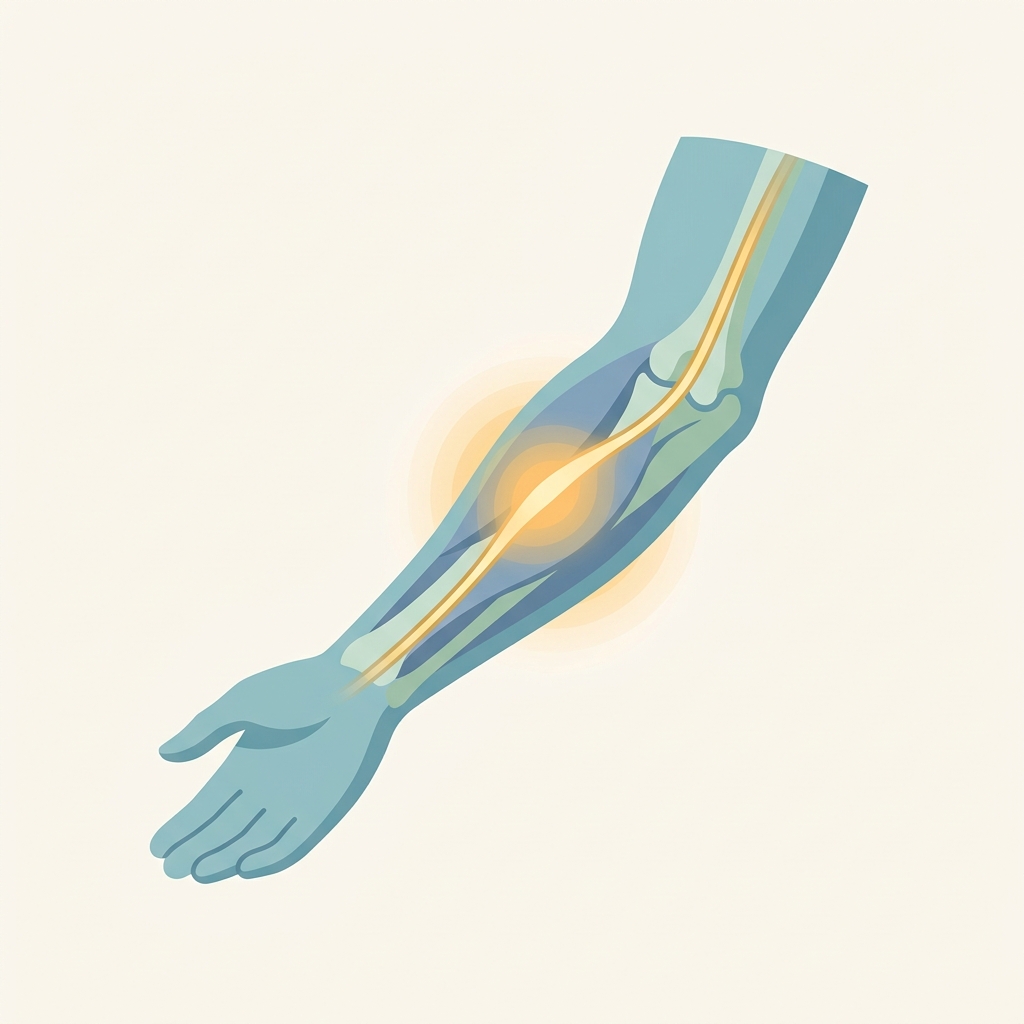
Pronator Syndrome
Get Clear, Concise Answers to Your Top Questions About Pronator Syndrome
Q1. What is Pronator Syndrome?
Pronator Syndrome is a condition where the median nerve—one of the main nerves in your arm—becomes compressed or squeezed in your forearm. This squeezing usually happens near your elbow, where the nerve passes through or under a muscle called the pronator teres. When this nerve is pinched, it can cause pain, numbness, or tingling in your forearm, palm, and fingers.
Q2. What causes Pronator Syndrome?
This condition is typically caused by repetitive movements or overuse of the forearm muscles. Common causes include:
- Repetitive wrist and arm activities, such as typing, hammering, or playing racket sports.
- Enlarged or swollen forearm muscles (common in weightlifters or manual laborers).
- Scar tissue from a previous injury near the elbow.
- Anatomical variations, where the nerve is naturally positioned in a tight spot.
Q3. What are the common symptoms of Pronator Syndrome?
Symptoms usually develop slowly and may get worse with arm activity. They include:
- A dull, aching pain in the front of your forearm.
- Numbness or tingling in your thumb, index finger, middle finger, and part of your ring finger.
- A feeling of fatigue or weakness in your forearm and hand, especially when trying to grip or twist things.
- Tenderness when pressing on the forearm muscle near your elbow.
Q4. How is Pronator Syndrome different from Carpal Tunnel Syndrome?
Both conditions affect the median nerve, but they pinch it in different spots:
- Location of pressure: In Pronator Syndrome, the nerve is squeezed in the forearm near the elbow. In Carpal Tunnel Syndrome, it is squeezed at the wrist.
- Sensation in the palm: Pronator Syndrome often causes numbness in the palm of your hand. Carpal Tunnel Syndrome usually spares the palm because the nerve branch to the palm splits off before the wrist.
- Night pain: Carpal Tunnel Syndrome frequently wakes people up at night. Pronator Syndrome rarely causes pain that wakes you up.
Q5. Who is most likely to develop Pronator Syndrome?
People who perform repetitive forearm and wrist motions are at the highest risk. This includes:
- Carpenters, mechanics, and manual laborers.
- Athletes who play tennis, baseball, or golf, or who lift weights.
- Office workers who type or use a mouse for long hours.
- Musicians, especially those playing stringed or percussion instruments.
Q6. When should I see a doctor for forearm or elbow pain?
You should schedule an appointment with a healthcare professional if:
- Your pain or numbness does not improve after a few weeks of rest.
- You find it difficult to perform daily tasks like holding a cup or opening a jar.
- You notice a loss of strength or coordination in your hand or fingers.
- Your symptoms are getting progressively worse.
Q7. How is Pronator Syndrome diagnosed?
A doctor will perform a physical exam and review your medical history. During the exam, they will:
- Press on specific areas of your forearm to check for tenderness.
- Ask you to perform specific arm movements, like turning your palm down against resistance, to see if it triggers your symptoms.
- Check the strength and sensation in your hand and fingers.
Q8. Are there any tests needed to confirm the diagnosis?
Yes, your doctor might order tests to rule out other problems or locate the nerve pinch:
- Electromyography (EMG) and Nerve Conduction Studies: These measure the electrical activity in your nerves and muscles. They are often normal in Pronator Syndrome, which helps rule out Carpal Tunnel Syndrome.
- Ultrasound or MRI: These imaging tests can show if there is swelling, a muscle tear, or scar tissue compressing the nerve.
- X-rays: To make sure there are no bone spurs or joint issues in the elbow causing your pain.
Q9. What are the non-surgical treatment options?
Most cases of Pronator Syndrome can be successfully treated without surgery. Conservative options include:
- Rest and activity modification: Avoiding the activities that trigger your pain.
- Splinting: Wearing a splint that keeps your elbow and wrist from moving, especially at night or during activities, to give the nerve a break.
- Anti-inflammatory medications: Over-the-counter pain relievers can help reduce swelling around the nerve.
- Physical or occupational therapy: Specialized exercises to stretch and strengthen the forearm muscles.
Q10. Can physical therapy or exercises help?
Yes, physical therapy is very effective. A therapist can teach you:
- Nerve gliding exercises: Gentle movements that help the median nerve slide smoothly through the forearm muscles.
- Forearm stretches: Exercises to relax and lengthen the pronator muscles to relieve pressure on the nerve.
- Strengthening exercises: Once pain decreases, to build forearm and grip strength safely.
Q11. What activities or habits should I avoid?
While healing, you should avoid movements that strain your forearm muscles:
- Repetitive twisting motions of the forearm (like using a screwdriver or turning doorknobs).
- Heavy lifting or forceful gripping.
- Leaning directly on your forearm or inner elbow.
- Working at a computer station that does not support your elbows and wrists properly.
Q12. When is surgery considered for Pronator Syndrome?
Surgery is usually considered only after conservative treatments have failed to provide relief after 3 to 6 months. It may also be recommended sooner if:
- You have severe, constant numbness or muscle weakness.
- Tests show significant nerve damage that is getting worse.
- A physical blockage, like scar tissue or a bone spur, is pressing on the nerve.
Q13. What does the surgery involve, and what is the recovery like?
The surgery is called \"pronator decompression.\"
- The Procedure: The surgeon makes an incision in the forearm and releases the tight bands of tissue or muscle fibers that are pressing on the median nerve.
- The Recovery: You may need to wear a splint or sling for a short period. Most patients start gentle rehabilitation within a week or two. Complete recovery and return to full activities can take several weeks to months, depending on the severity of the initial compression.
Q14. Can Pronator Syndrome be prevented?
You can lower your risk of developing this condition by making a few adjustments:
- Take regular breaks: Rest your arms during repetitive tasks.
- Use proper ergonomics: Arrange your workspace so your wrists are straight and your elbows are supported.
- Vary your tasks: Avoid doing the same hand and arm movements for hours at a time.
- Warm up and stretch: Stretch your forearm muscles before sports or manual work.
Q15. What is the long-term outlook for someone with Pronator Syndrome?
The long-term outlook is excellent. The vast majority of patients recover fully with non-surgical treatments. If surgery is required, most patients experience significant relief from their symptoms and are able to return to their normal activities, although nerve recovery can take time.
We encourage you to write down any specific questions you have and discuss them thoroughly with your surgeon, doctor, or physical therapist. They are your best resource for personalized advice and care.
Disclaimer: This brochure provides general information and is not a substitute for professional medical advice. Always consult your doctor or qualified healthcare provider with any questions you may have regarding your specific medical condition and treatment plan.

Related articles
Browse all articlesTrusted External Resources
Curated educational materials to help you make informed decisions about your orthopaedic bone & joint conditions.

Orthopaedia

Orthogate Patient Education