
Distal Biceps Tendon Rupture
Get Clear, Concise Answers to Your Top Questions About Distal Biceps Tendon Rupture
Q1. What is a distal biceps tendon rupture?
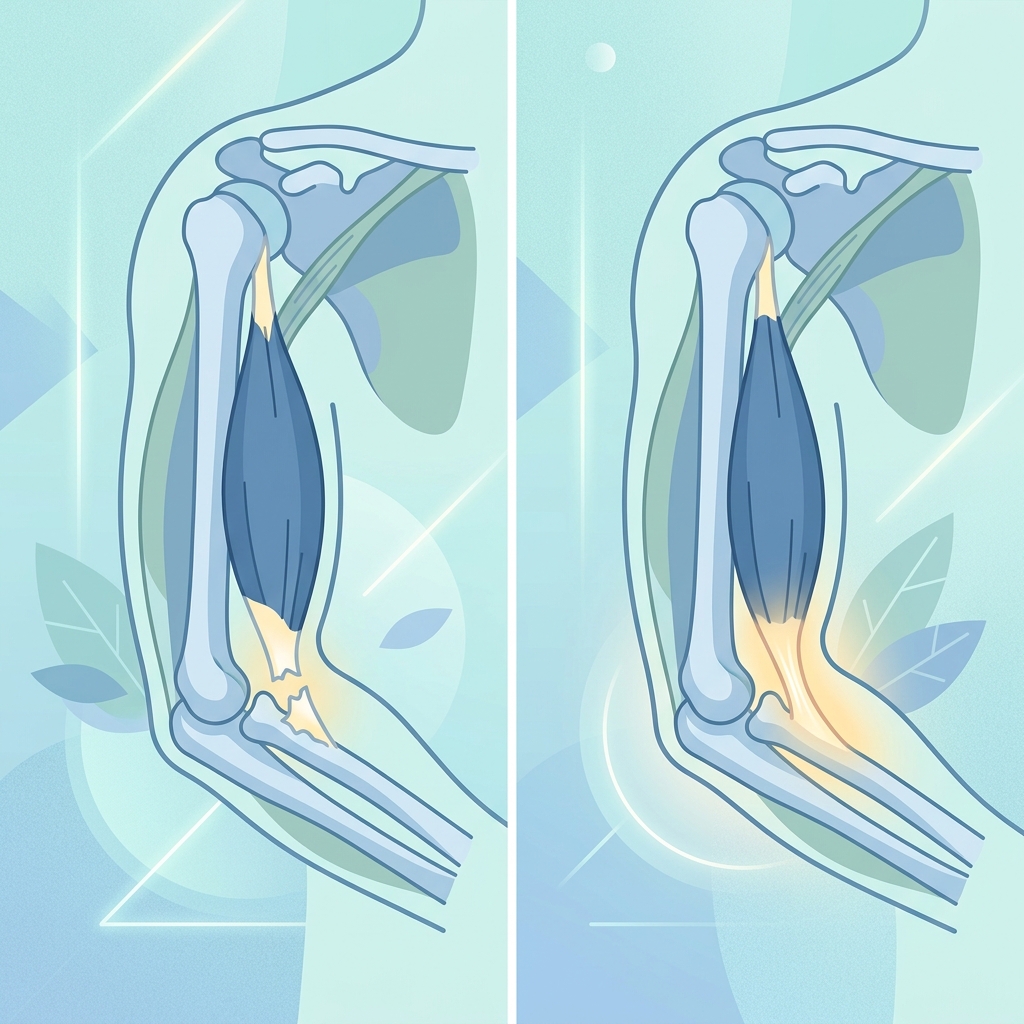
The biceps muscle is located in the front of your upper arm and has two tendons attaching it to the shoulder (proximal tendons) and one tendon attaching it to the elbow (distal tendon). A distal biceps tendon rupture occurs when the tendon at the elbow completely or partially tears away from the radius bone in the forearm. This is a relatively uncommon injury that makes it difficult to bend the arm and rotate the forearm.
Q2. What causes a distal biceps tendon to rupture?
A rupture typically happens during a sudden, forceful event. This most often occurs when your elbow is bent and is forced straight against a heavy load. Examples include:
- Trying to catch a falling heavy object
- Lifting a heavy piece of furniture
- Performing heavy weightlifting (like deadlifts or biceps curls)
The sudden resistance causes the tendon to fail under the extreme tension.
Q3. Who is most likely to experience a distal biceps tendon rupture?
This injury most commonly affects active, middle-aged men between the ages of 30 and 60. It is often associated with heavy manual labor, contact sports, or weightlifting. Smoking and using corticosteroid medications can also weaken tendons, increasing the risk of a rupture.
Q4. What are the common symptoms of a distal biceps tendon rupture?
When the tendon ruptures, you will typically experience:
- A sudden, sharp pain in the front of the elbow
- An audible pop or snapping sensation at the time of injury
- Swelling and bruising in the front of the elbow and forearm
- Weakness when trying to bend your elbow
- Significant weakness when trying to rotate your forearm (like twisting a screwdriver or turning a doorknob)
- A change in the shape of the biceps muscle, which may bunch up in the upper arm
Q5. What is the "Popeye deformity" and does it always happen?
When the distal biceps tendon tears completely, the biceps muscle is no longer anchored to the forearm. As a result, the muscle can pull back (retract) toward the shoulder. This creates a visible bulge in the upper arm, resembling the cartoon character Popeye's arm. This deformity is common in complete tears but may not occur in partial tears or if the surrounding tissues keep the muscle in place.
Q6. How is a distal biceps tendon rupture diagnosed?
Dr. Veillette will perform a thorough physical examination of your arm. He will look for swelling, bruising, and the Popeye deformity. He will also perform the "Hook Test," where he attempts to hook his finger under the biceps tendon at the front of your elbow. If the tendon is ruptured, there will be nothing to hook. An MRI or ultrasound is usually ordered to confirm the diagnosis, check if the tear is partial or complete, and see how far the tendon has retracted.
Q7. Can a distal biceps tendon rupture heal on its own?
A completely ruptured distal biceps tendon cannot reattach itself to the bone and will not heal on its own. While the arm will eventually heal from the initial injury, the biceps muscle will remain detached, leading to permanent weakness. A partial tear, however, may sometimes heal with rest and physical therapy, though it carries a risk of becoming a complete tear if not managed carefully.
Q8. What are the non-surgical treatment options for this injury?
Non-surgical treatment is focused on managing symptoms and adapting to the loss of strength. It includes:
- Wearing a sling for comfort
- Rest and avoiding heavy lifting
- Applying ice and taking anti-inflammatory medications to reduce pain and swelling
- Physical therapy to restore elbow movement and strengthen surrounding muscles
This approach is usually reserved for older, less active individuals, or those who cannot undergo surgery due to other medical conditions.
Q9. What are the consequences of not having surgery?
If you choose not to have surgery for a complete rupture, your arm will still function because other muscles can compensate. However, you will experience permanent weakness. Specifically, you can expect:
- A 30% loss of elbow bending strength (flexion)
- A 40% to 50% loss of forearm twisting strength (supination), which makes activities like opening jars, turning keys, and using manual tools difficult
- Mild, chronic muscle cramping or fatigue in the arm during repetitive activities
Q10. Who is a good candidate for distal biceps repair surgery?
Surgery is highly recommended for active individuals, manual laborers, athletes, and anyone who requires full arm strength and endurance for their daily activities or hobbies. Reattaching the tendon restores normal strength and helps prevent future fatigue and cramping in the arm.
Q11. What does the surgical repair procedure involve?
During the surgery, Dr. Veillette makes a small incision in the front of your elbow. He locates the torn end of the biceps tendon, prepares the bone where it originally attached (the radial tuberosity), and reattaches the tendon securely using specialized metal buttons, suture anchors, or screws. This procedure is typically performed on an outpatient basis, meaning you can go home the same day.
Q12. Why is timing important for biceps repair surgery?
It is best to perform the surgery within the first two to three weeks after the injury. If surgery is delayed, the torn tendon starts to scar down and retract further up the arm. Over time, the muscle can shorten, and the tendon can degenerate, making a direct repair much more difficult or requiring a tendon graft from another part of your body.
Q13. What is the recovery timeline after distal biceps repair surgery?
Recovery is a gradual process:
- Weeks 1 to 2: Your arm is protected in a splint or brace to allow the tendon to start healing to the bone.
- Weeks 2 to 6: You will begin passive range-of-motion exercises, slowly moving the elbow with assistance.
- Weeks 6 to 12: You will transition to active movement, using your own muscle power to move the elbow without resistance.
- Months 3 to 6: Strengthening exercises begin, and you will gradually return to normal activities. Full recovery and return to heavy lifting or sports typically take 4 to 6 months.
Q14. What does physical therapy look like after surgery?
Physical therapy is a critical part of your recovery. Under the guidance of a therapist, you will perform exercises to restore elbow flexibility and prevent stiffness. As the tendon heals more securely to the bone, therapy will shift toward building strength in the biceps, forearm, and shoulder muscles, helping you safely return to your pre-injury level of activity.
Q15. What are the risks and success rates of surgery?
Distal biceps repair surgery is highly successful, with the vast majority of patients regaining full range of motion and near-normal strength. However, as with any surgery, there are risks, which include:
- Temporary or permanent numbness or weakness in the forearm due to nerve irritation
- Infection at the incision site
- Redetachment of the repaired tendon (rare)
- Bone growing where it shouldn't (heterotopic ossification), which can limit forearm rotation
Dr. Veillette will discuss these risks in detail and outline the precautions taken to minimize them.
We encourage you to write down any specific questions you have and discuss them thoroughly with your surgeon, doctor, or physical therapist. They are your best resource for personalized advice and care.
Disclaimer: This brochure provides general information and is not a substitute for professional medical advice. Always consult your doctor or qualified healthcare provider with any questions you may have regarding your specific medical condition and treatment plan.

Related articles
Browse all articlesTrusted External Resources
Curated educational materials to help you make informed decisions about your orthopaedic bone & joint conditions.

Orthopaedia

Orthogate Patient Education