
Triceps Tendon Tear
Get Clear, Concise Answers to Your Top Questions About Triceps Tendon Tear
Q1. What is a triceps tendon tear?
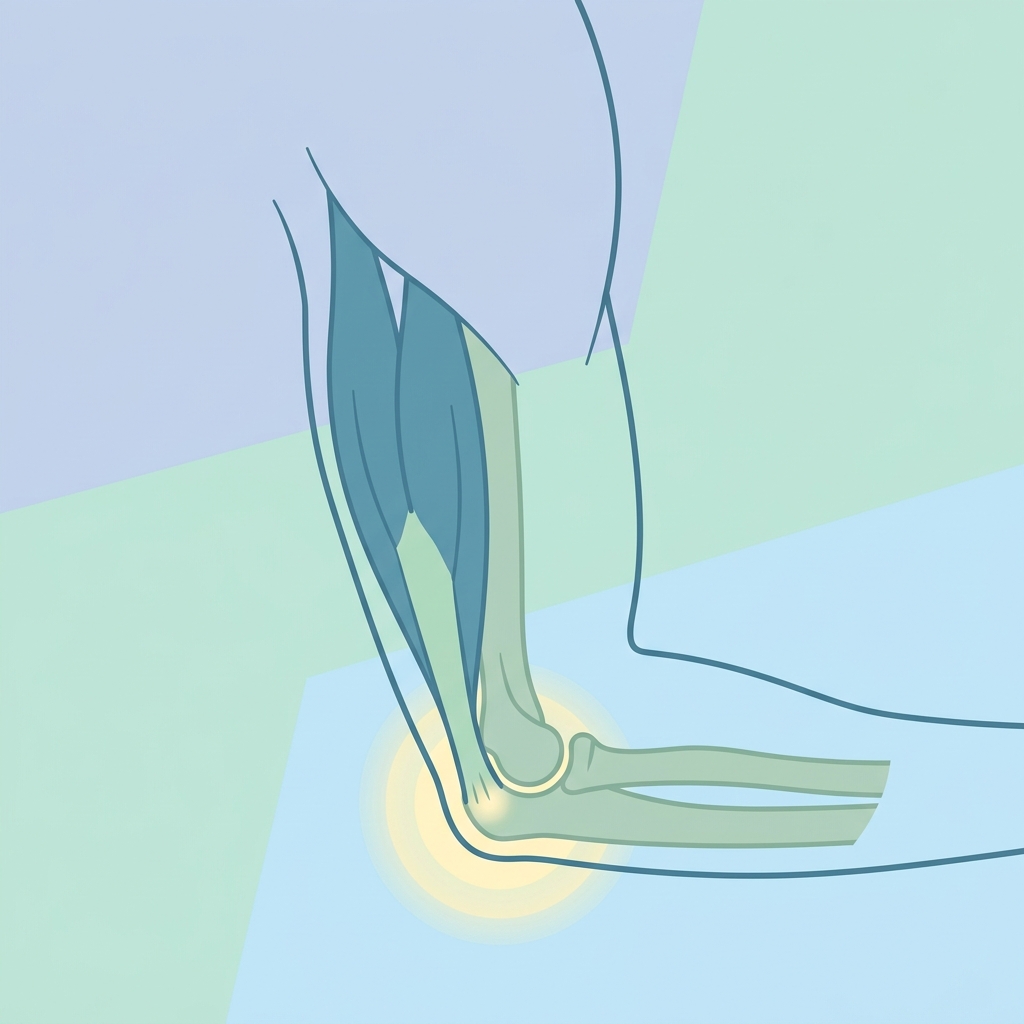
The triceps muscle on the back of your upper arm straightens your elbow. A triceps tendon tear occurs when the tendon anchoring this muscle to the bony tip of the elbow (olecranon) is partially or completely torn. A complete tear means the tendon is entirely detached, making it very difficult or impossible to straighten your arm.
Q2. What are the common causes of a triceps tendon tear?
Triceps tendon tears are usually caused by a sudden, forceful injury, such as:
- Falling on an outstretched hand with your arm extended.
- A direct blow to the back of the elbow during an accident or sports collision.
- Lifting a very heavy weight or performing overhead pressing movements that overload the tendon.
Q3. What does a triceps tendon tear feel like? (What are the symptoms?)
When the tear occurs, you will typically feel a sharp pain or pop at the back of your elbow. Other symptoms include:
- Severe pain and tenderness on the back of the arm.
- Swelling and bruising near the elbow joint.
- Weakness when trying to push objects or straighten your arm.
- A visible gap or dent just above the elbow.
Q4. Who is at risk for tearing their triceps tendon?
Factors that increase the risk of a triceps tendon tear include:
- Anabolic steroid use, which weakens tendon tissues.
- Frequent corticosteroid injections into the elbow for tendonitis.
- Chronic conditions like diabetes, kidney disease, rheumatoid arthritis, or lupus.
- Being a male between 30 and 50 years old involved in weight training or manual labor.
Q5. How is a triceps tendon tear diagnosed?
Dr. Veillette diagnoses a triceps tendon tear using:
- A physical exam to check for tenderness, a gap, and elbow extension strength.
- X-rays to check for a \"flake fracture\" (where a bone fragment is pulled off with the tendon).
- An MRI scan to confirm whether the tear is partial or complete and determine how far the tendon has retracted.
Q6. Can a triceps tendon tear heal on its own without surgery?
A partial tear involving less than 50% of the tendon can often heal on its own with rest and rehabilitation. However, a complete tear will not heal without surgery. Because the triceps muscle pulls the detached tendon away from the bone, the body cannot bridge the gap, resulting in permanent weakness.
Q7. What are the non-surgical treatment options for a partial triceps tear?
For small partial tears, conservative treatment includes:
- Wearing a splint or brace for a few weeks to rest the tendon.
- Avoiding heavy lifting, pushing, or stressful arm movements.
- Applying ice and taking anti-inflammatory medications to manage pain.
- A structured physical therapy program to rebuild flexibility and strength.
Q8. When is surgery needed for a triceps tendon tear?
Surgery is recommended for:
- All complete triceps tendon tears.
- Large partial tears (greater than 50%) causing persistent weakness or pain.
- Active individuals, athletes, or manual laborers who need full arm extension strength.
- Cases where conservative treatment has failed to restore function.
Q9. What happens during a triceps tendon repair surgery?
Triceps tendon repair is a same-day outpatient procedure:
- The surgeon makes an incision on the back of the elbow to access the tendon.
- The bone is prepared, and the torn tendon is stitched using strong sutures.
- The sutures are anchored back to the bone using drill holes or bone anchors.
- The incision is closed, and the arm is placed in a protective splint or brace.
Q10. What are the risks of triceps tendon repair surgery?
Surgical risks are rare but can include:
- Infection at the incision site.
- Irritation of the ulnar nerve (the \"funny bone\" nerve), causing temporary numbness in the ring and pinky fingers.
- Elbow joint stiffness, which is managed with early physical therapy.
- Failure of the repair or re-rupture if the arm is overloaded too soon.
Q11. How long is the recovery after a triceps tendon tear?
Recovery is a gradual process:
- Weeks 1 to 6: The arm is protected in a brace to allow the tendon to heal to the bone.
- Weeks 6 to 12: The brace is removed, and active movement and light exercises begin.
- Months 3 to 6: Advanced strengthening is introduced, allowing a return to normal daily tasks.
- Months 6 to 9: Full return to heavy lifting and sports is usually permitted.
Q12. What does physical therapy look like after a triceps tendon tear?
Physical therapy is divided into phases:
- Early phase: Focuses on gentle, therapist-guided range-of-motion stretching to prevent stiffness.
- Middle phase: Introduces active movement and light resistance exercises using bands.
- Late phase: Focuses on progressive strengthening, functional activities, and sport-specific training.
Q13. Will I be able to fully bend and straighten my elbow again?
Most patients regain excellent range of motion. However, minor permanent stiffness (an inability to fully straighten or bend the arm) can occur, especially in severe injuries. Consistent adherence to your physical therapy program is crucial to maximizing your elbow mobility.
Q14. When can I return to heavy lifting, sports, or work?
Return timelines depend on your activities:
- Desk work: 1 to 2 weeks, using the uninjured arm.
- Light duties: 8 to 12 weeks, avoiding heavy pushing.
- Heavy lifting/contact sports: 6 to 9 months, once the tendon is fully healed and strength is restored.
Q15. How can I prevent a repeat triceps tendon tear in the future?
To prevent re-injury:
- Increase exercise intensity and weight lifting loads gradually.
- Warm up and stretch properly before upper-body workouts.
- Strengthen the shoulder and chest muscles to support arm movements.
- Avoid anabolic steroids and unnecessary localized steroid injections.
We encourage you to write down any specific questions you have and discuss them thoroughly with your surgeon, doctor, or physical therapist. They are your best resource for personalized advice and care.
Disclaimer: This brochure provides general information and is not a substitute for professional medical advice. Always consult your doctor or qualified healthcare provider with any questions you may have regarding your specific medical condition and treatment plan.

Related articles
Browse all articlesTrusted External Resources
Curated educational materials to help you make informed decisions about your orthopaedic bone & joint conditions.

Orthopaedia
Orthogate Patient Education