Ulnar Collateral Ligament Tear
Get Clear, Concise Answers to Your Top Questions About Ulnar Collateral Ligament Tear
Q1. What is the ulnar collateral ligament (UCL) in the elbow?
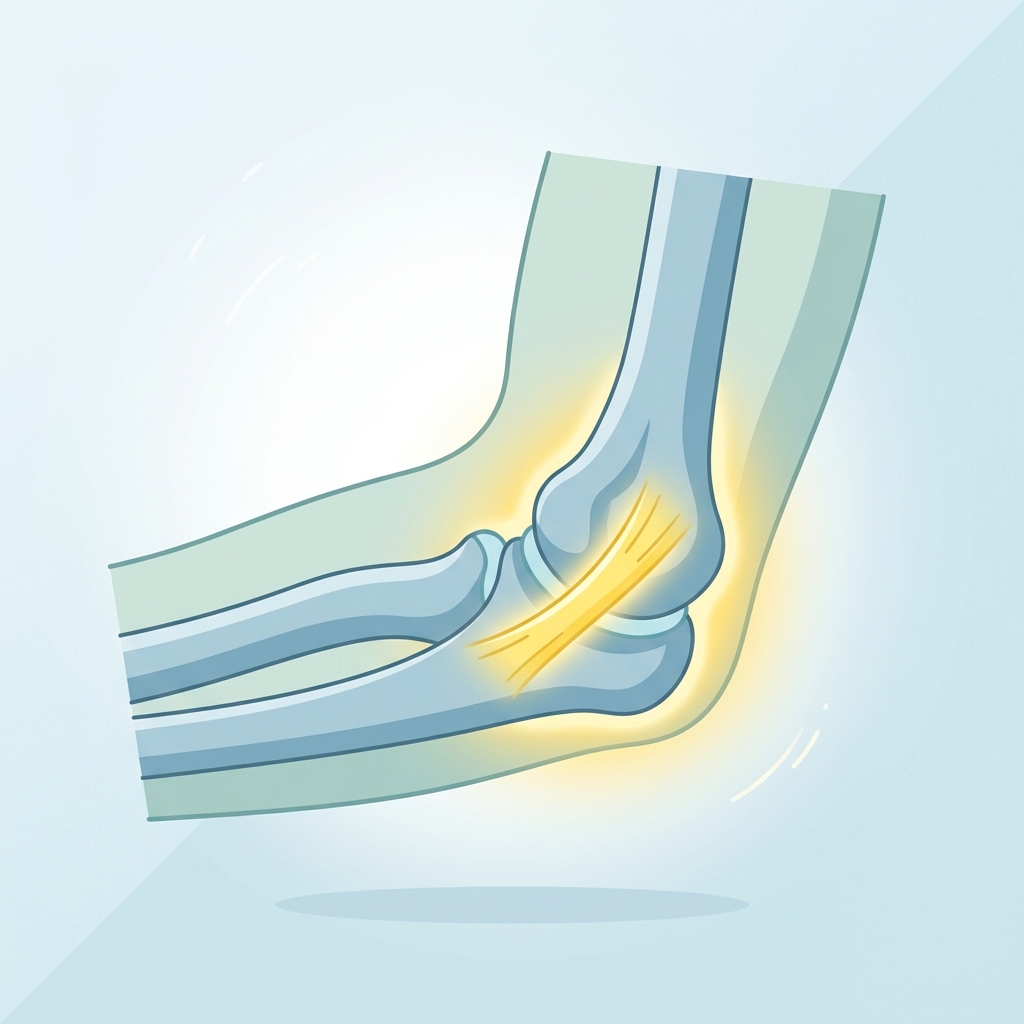
The ulnar collateral ligament (UCL) is a strong band of tissue located on the inner side of your elbow. It connects your upper arm bone (humerus) to your forearm bone (ulna). The UCL acts like a strong cable, keeping the elbow joint stable and preventing it from opening up too much, especially during throwing motions.
Q2. What is a UCL tear, and how does it happen?
A UCL tear is a stretch, partial tear, or complete rip of the ligament on the inside of the elbow. This injury most commonly happens in two ways:
- Overuse: Repetitive overhead throwing causes tiny tears in the ligament over time. Without enough rest, the ligament wears down and eventually fails.
- Trauma: A sudden stress on the elbow, such as falling on an outstretched arm or a collision during sports, can snap the ligament.
Q3. What is the difference between a partial tear and a complete tear of the UCL?
The severity of a UCL tear determines how much stability is lost in the elbow joint:
- Partial Tear: The ligament is stretched or frayed, but some of the fibers are still intact. The elbow may feel painful, but it remains relatively stable during light activities.
- Complete Tear: The ligament is fully torn or detached from the bone. The elbow loses its stability, making throwing or using the arm for heavy lifting very painful or impossible.
Q4. Who is most at risk for tearing their UCL?
UCL tears are most common in athletes who perform repetitive, overhead throwing motions. Those at highest risk include:
- Baseball players, particularly pitchers (this is why UCL reconstruction is often called Tommy John surgery).
- Javelin throwers, quarterback players in football, and tennis players.
- Gymnasts and wrestlers who put high stress on their elbows during falls or landings.
Q5. What are the common symptoms of a UCL tear?
If you have torn your UCL, you will likely experience symptoms on the inner side of your elbow. The most common signs include:
- Pain on the inner side of the elbow, especially when throwing or exerting force.
- A feeling of instability, looseness, or "giving out" in the elbow joint.
- A sudden "pop" or tearing sensation on the inner elbow at the moment of injury.
- Numbness or tingling in the ring and pinky fingers (due to irritation of the nearby ulnar nerve).
- Reduced throwing speed or accuracy.
Q6. Does a UCL tear cause sudden pain, or does it develop slowly?
It can be both. For some athletes, it develops slowly over months or years of throwing, causing a gradual increase in pain and a loss of throwing velocity. For others, the ligament tears suddenly during a single throw or a fall, causing sharp, immediate pain and a "popping" sensation.
Q7. How is a UCL tear diagnosed?
To diagnose a UCL tear, your doctor will perform a thorough evaluation that includes:
- Medical History: Discussing your symptoms, sports participation, and when the pain started.
- Physical Exam: Testing the stability of your elbow by gently pressing on the inner side and bending the joint (valgus stress test).
- Imaging Tests: An MRI, often with a special dye injected into the joint (MRI arthrogram), is the best way to see a tear. X-rays may also be used to check for bone spurs or fractures.
Q8. What non-surgical treatment options are available for a UCL tear?
Many patients, especially non-throwing athletes or those with partial tears, recover well without surgery. Non-surgical treatments include:
- Rest: Taking a break from throwing and other aggravating activities to allow the ligament to heal.
- Physical Therapy: Specific exercises to strengthen the muscles around the elbow and shoulder, which helps take pressure off the ligament.
- Medications: Anti-inflammatory medicines to help reduce pain and swelling.
- Biologic Injections: Injections like Platelet-Rich Plasma (PRP) can sometimes help partial tears heal.
Q9. When is surgery recommended for a UCL tear?
Surgery is typically recommended for patients who:
- Have a complete UCL tear and want to return to high-level overhead throwing or sports.
- Have a partial tear that did not improve after several months of rest and physical therapy.
- Experience daily pain or instability during routine activities.
Q10. What is "Tommy John surgery" (UCL reconstruction)?
UCL reconstruction, widely known as Tommy John surgery, is a procedure where the torn ligament is replaced with a healthy tendon from another part of your body (such as your forearm or hamstring) or from a donor. The surgeon drills small holes in the upper arm and forearm bones, threads the new tendon graft through the holes, and secures it to act as the new ligament.
Q11. What is the difference between UCL reconstruction and UCL repair?
The choice between repair and reconstruction depends on the type and location of the tear:
- UCL Repair: If the ligament is pulled off the bone but still healthy, the surgeon may sew it back to the bone and add a strong synthetic tape (internal brace) to support it. This has a faster recovery time than reconstruction.
- UCL Reconstruction: If the ligament is shredded or worn out from years of overuse, it must be completely replaced with a new tendon graft.
Q12. How long is the recovery process after UCL surgery?
Recovery is a slow, gradual process because the new ligament needs time to become strong and firmly attached to the bone. For throwing athletes, full recovery after UCL reconstruction typically takes 12 to 18 months. For UCL repair with an internal brace, recovery can be shorter, often around 6 to 9 months.
Q13. Will I need to wear a brace after a UCL tear or surgery?
Yes. After surgery, your elbow will be placed in a hinged brace. Initially, the brace is locked to keep the elbow still and protect the healing tissue. Over the first few weeks, the brace is adjusted to allow you to slowly move your elbow more. The brace is usually worn for about 6 to 8 weeks after surgery.
Q14. When can I return to sports or throwing after a UCL injury?
Returning to sports is done in careful phases. For non-surgical recovery or UCL repair, you might start light throwing in 3 to 4 months. After UCL reconstruction, you will not start a throwing program until about 5 to 6 months post-surgery. You will slowly build up distance, intensity, and pitching mechanics, only returning to full competition once you have cleared all strength and mobility tests.
Q15. What are the long-term outcomes and success rates for UCL recovery?
The success rate for both non-surgical treatment of partial tears and surgical reconstruction is very high. Between 80% and 90% of athletes who undergo UCL reconstruction are able to return to their previous level of sports, or even higher. Consistency with physical therapy and maintaining good throwing mechanics are key to long-term success.
We encourage you to write down any specific questions you have and discuss them thoroughly with your surgeon, doctor, or physical therapist. They are your best resource for personalized advice and care.
Disclaimer: This brochure provides general information and is not a substitute for professional medical advice. Always consult your doctor or qualified healthcare provider with any questions you may have regarding your specific medical condition and treatment plan.

Related articles
Browse all articlesTrusted External Resources
Curated educational materials to help you make informed decisions about your orthopaedic bone & joint conditions.

Orthopaedia
Orthogate Patient Education