
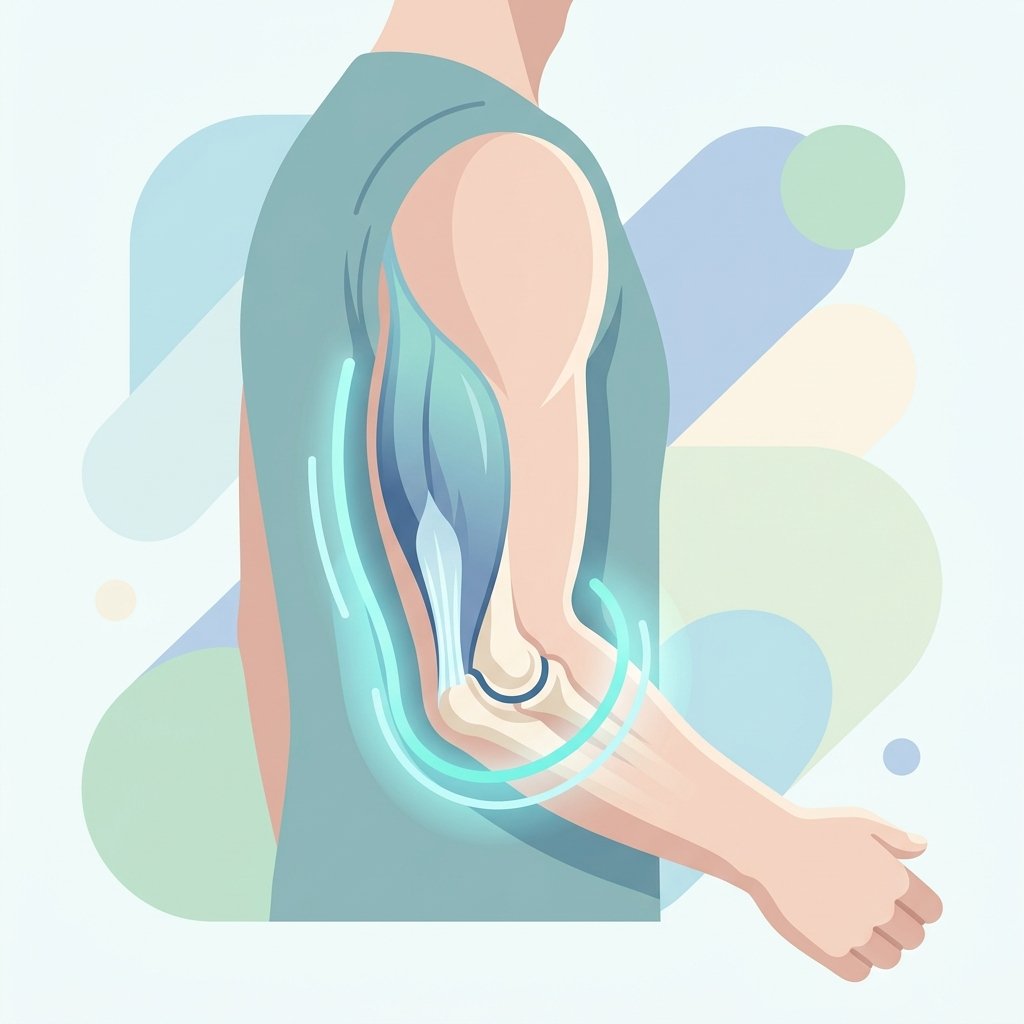
Triceps Tendon Repair: Reattachment of the triceps tendon to the olecranon footprint
Get Clear, Concise Answers to Your Top Questions About Triceps Tendon Repair
Q1. What is a triceps tendon repair, and why is it needed?
The triceps muscle is located on the back of your upper arm and is responsible for straightening your elbow. The triceps tendon attaches this muscle to the olecranon, which is the bony tip of your elbow (the elbow footprint). A triceps tendon repair is a surgical procedure to reattach a torn triceps tendon back to the bone. It is needed when the tendon is completely ruptured or severely torn, which causes significant weakness when trying to push things or straighten your arm.
Q2. What happens if a torn triceps tendon is not repaired?
If a complete triceps tendon rupture is left untreated, the tendon cannot heal back to the bone on its own. This leads to permanent weakness when straightening your elbow, making it difficult to perform everyday tasks like pushing open doors, rising from a chair, or lifting objects overhead. Over time, the muscle can also retract (pull back) and become stiff, making a delayed repair much more difficult.
Q3. How is a triceps tendon tear diagnosed?
Dr. Veillette diagnoses a triceps tendon tear through a combination of:
- A physical examination to check for swelling, bruising, and a gap at the back of the elbow, and to test your ability to straighten your arm against resistance.
- X-rays to rule out other bone injuries and check if a small piece of bone was pulled away with the tendon.
- An MRI scan to confirm the diagnosis, show whether the tear is partial or complete, and determine the quality of the tendon tissue.
Q4. What does the surgery involve to reattach the tendon?
During the surgery, an incision is made on the back of the elbow. Dr. Veillette locates the torn end of the triceps tendon, cleans the bone surface (the olecranon footprint) where the tendon belongs, and secures the tendon back to the bone. This is typically done using small bone anchors (screws with strong sutures attached) or by drilling tiny tunnels through the bone and threading the sutures through them to tie the tendon securely in place.
Q5. What type of anesthesia is used during the procedure?
Triceps tendon repair is usually performed under general anesthesia (where you are asleep) combined with a regional nerve block. The nerve block numbs your arm and helps provide excellent pain relief for several hours after the surgery. Dr. Veillette and the anesthesia team will discuss the best options for your specific health needs before the procedure.
Q6. How should I prepare for my triceps tendon repair surgery?
Preparing for surgery involves several important steps:
- Follow instructions on when to stop eating and drinking the night before surgery.
- Review your medications with Dr. Veillette's team, as you may need to stop blood thinners or other medications temporarily.
- Arrange for a responsible adult to drive you home after surgery and stay with you for the first 24 hours.
- Prepare your home by making everyday items easy to reach with your non-operated arm, and clear paths to prevent tripping.
Q7. Will I need to wear a brace or splint after surgery?
Yes. To protect the repaired tendon while it heals, your elbow will be placed in a splint or a hinged brace immediately after surgery. The brace is typically set in a slightly bent position (around 30 to 45 degrees) to prevent you from bending the elbow too far, which could pull on the repair. You will need to wear this brace at all times, including while sleeping, for the first few weeks.
Q8. How should I sleep after a triceps tendon repair?
Sleeping can be challenging during the early recovery period. We recommend:
- Sleeping in a semi-reclined position, such as in a recliner chair or propped up with several pillows in bed.
- Supporting your operated arm on a pillow next to your body to keep it slightly elevated above your heart, which helps reduce swelling and pain.
- Ensuring your protective brace or splint remains on and secured throughout the night to prevent accidental movement.
Q9. How can I manage pain and swelling immediately after surgery?
Managing early discomfort is key to a smooth recovery:
- Take your prescribed pain medications as directed by Dr. Veillette's team, starting before the nerve block completely wears off.
- Apply ice packs to the back of the elbow for 15 to 20 minutes at a time, several times a day, keeping the dressing completely dry.
- Keep your hand, wrist, and fingers moving frequently to help pump fluid out of the arm and reduce swelling.
Q10. What does the recovery timeline look like for this procedure?
Recovery is a gradual process that requires patience:
- Weeks 1 to 2: Focus on pain control, swelling reduction, and keeping the incision dry. Gentle hand and wrist exercises are started.
- Weeks 2 to 6: The elbow is kept in a protective brace with limited, controlled bending allowed. Passive range-of-motion exercises begin.
- Weeks 6 to 12: Active movement is started, and the brace is gradually discontinued.
- Months 3 to 6: Strengthening exercises begin, with a gradual return to normal daily activities and eventually sports.
Q11. When can I start physical therapy, and what does it involve?
Physical therapy typically begins within 1 to 2 weeks after surgery. In the beginning, it involves passive motion (where the therapist moves your arm) to prevent stiffness without engaging the triceps muscle. As the weeks progress, you will transition to active movement (moving the arm yourself) and eventually progressive resistance exercises to rebuild strength in the triceps muscle.
Q12. What are the main risks or potential complications of this surgery?
While triceps tendon repair is a highly successful procedure, it does carry some risks:
- Stiffness or loss of full elbow extension (straightening) or flexion (bending).
- Failure of the repair or re-tear of the tendon, especially if the arm is bent too early or forced.
- Nerve irritation, particularly of the ulnar nerve which runs close to the inner side of the elbow.
- Infection, delayed healing of the incision, or bleeding.
Q13. When can I return to light activities and driving?
You can usually return to light daily tasks (like typing, writing, and eating) within a few days using your non-operated arm, as long as you do not use your operated arm to lift or push anything. You should not drive until you are no longer taking prescription pain medications and can safely control the steering wheel with both hands, which is typically 4 to 6 weeks after surgery.
Q14. When is it safe to return to heavy lifting or sports?
It takes about 3 months for the reattached tendon to become securely anchored to the bone. Heavy lifting, pushing, pulling, and contact sports place high stress on the triceps repair and should be avoided until at least 4 to 6 months after surgery. Dr. Veillette will evaluate your progress and strength before clearing you for these activities.
Q15. What are the signs of a problem that should prompt me to contact Dr. Veillette's office?
You should contact the office immediately if you experience:
- A sudden, severe increase in pain that is not relieved by medication.
- Signs of infection, such as increased redness, swelling, warmth, or fluid drainage from the incision, or a fever over 101°F (38.3°C).
- Numbness, tingling, or sudden loss of sensation in your hand or fingers.
- A sudden pop or tearing sensation in the back of your elbow, followed by an inability to hold the arm straight.
We encourage you to write down any specific questions you have and discuss them thoroughly with your surgeon, doctor, or physical therapist. They are your best resource for personalized advice and care.
Disclaimer: This brochure provides general information and is not a substitute for professional medical advice. Always consult your doctor or qualified healthcare provider with any questions you may have regarding your specific medical condition and treatment plan.

Related articles
Browse all articlesTrusted External Resources
Curated educational materials to help you make informed decisions about your orthopaedic bone & joint conditions.

Orthopaedia
Orthogate Patient Education