
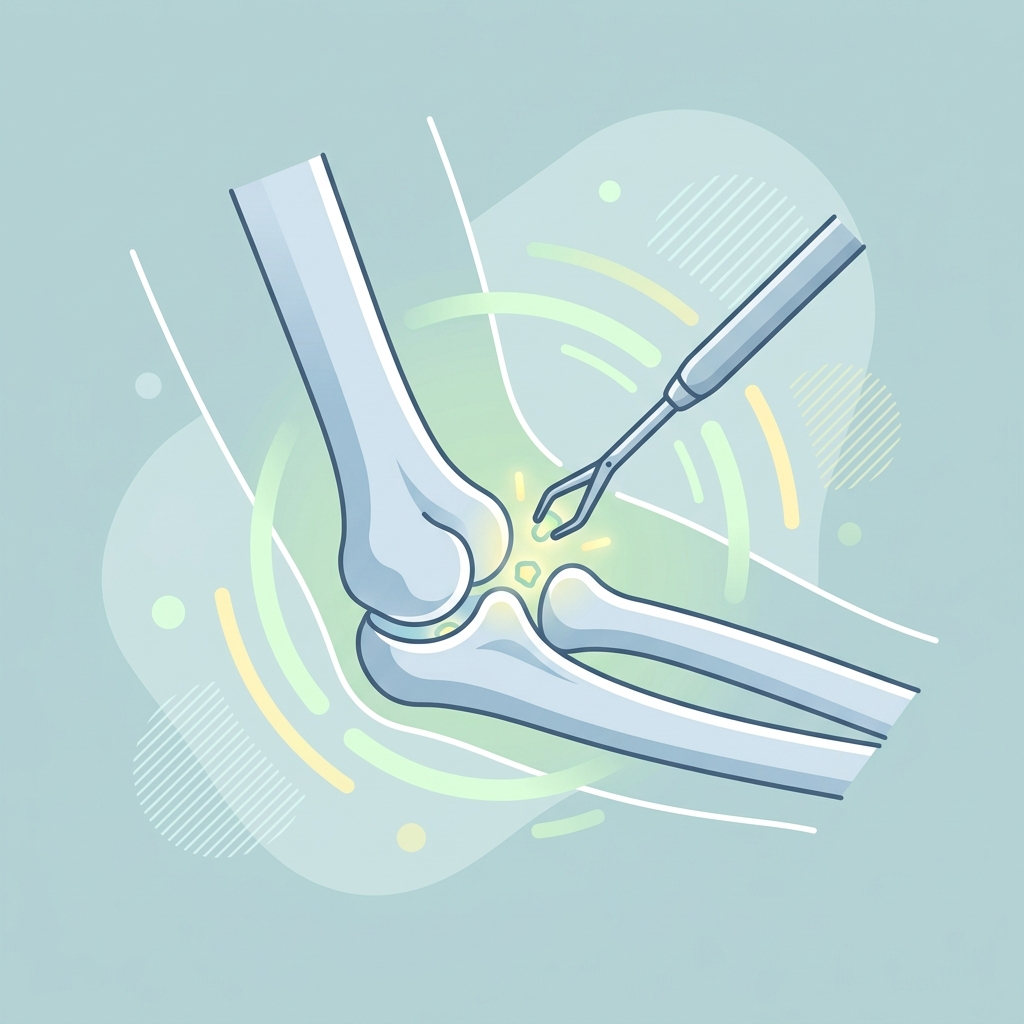
Arthroscopic Debridement & Loose Body Removal: Extraction of osteochondral fragments and osteophyte excision
Get Clear, Concise Answers to Your Top Questions About Arthroscopic Debridement & Loose Body Removal
Q1. What is arthroscopic elbow debridement and loose body removal?
Arthroscopic elbow debridement and loose body removal is a minimally invasive surgical procedure used to clean out the elbow joint. Using a small camera called an arthroscope and specialized instruments inserted through tiny incisions, your surgeon can inspect the joint, remove debris or bone fragments, and trim away bone spurs (osteophytes) to relieve pain and restore motion.
Q2. What are "loose bodies" and "osteophytes" in the elbow joint?
Loose bodies are small fragments of cartilage or bone that have broken off and float freely inside the elbow joint, often causing catching, locking, or pain. Osteophytes, commonly known as bone spurs, are smooth, bony projections that develop over time due to wear-and-tear or arthritis. These spurs can limit elbow motion and rub against surrounding tissues, causing discomfort.
Q3. What are the common symptoms that indicate I might need this procedure?
You may benefit from this surgery if you experience:
- Catching, locking, or clicking sensations during elbow movement.
- A sudden, sharp pain that feels like something is "stuck" in the joint.
- Decreased range of motion, particularly difficulty fully straightening or bending your elbow.
- Chronic swelling, stiffness, or pain that does not improve with conservative treatments.
Q4. How is the decision made to perform this surgery?
The decision is based on a comprehensive clinical assessment. Dr. Veillette will evaluate your medical history, perform a physical examination to check your range of motion and joint stability, and review imaging studies. X-rays, CT scans, or MRI scans are critical to locate the exact size and position of loose bodies or bone spurs before surgery.
Q5. What does the surgical preparation involve?
Preparation involves a pre-operative evaluation to ensure you are healthy for surgery. You will receive instructions on:
- Fasting (not eating or drinking) after midnight before the procedure.
- Reviewing and temporarily stopping certain medications, such as blood thinners or anti-inflammatories.
- Arranging for a family member or friend to drive you home after the surgery and assist you during the first 24 hours.
Q6. What type of anesthesia is used during this arthroscopic procedure?
The surgery is typically performed under general anesthesia, regional anesthesia (a nerve block that numbs your entire arm), or a combination of both. A nerve block is highly beneficial as it provides excellent pain relief that lasts for several hours after the surgery is completed, allowing you to wake up comfortably.
Q7. How is the surgery performed?
During the procedure:
- The surgeon makes several tiny incisions (portals) around the elbow joint, each about the size of a keyhole.
- Fluid is introduced into the joint to expand it, providing a clear view for the arthroscope.
- The arthroscope projects real-time video onto a monitor, guiding the surgeon.
- Specialized instruments are inserted through other portals to grasp and extract loose bodies and use a small burr to shave down bone spurs.
- The incisions are closed with small sutures and covered with sterile dressings.
Q8. What are the potential risks and complications associated with this procedure?
While arthroscopy is very safe, potential risks include:
- Temporary or permanent nerve irritation or injury, as major nerves pass close to the elbow joint.
- Infection or bleeding at the incision sites.
- Joint stiffness or failure to fully restore range of motion.
- Mild recurrence of bone spurs or joint inflammation over time.
Q9. Will I need to wear a brace, splint, or sling after surgery?
Yes, a soft sterile dressing and a sling are usually applied immediately after surgery to protect your elbow and support your arm. The sling is typically worn for comfort for the first few days. Depending on the extent of bone spur removal and joint stability, a specialized brace or splint is rarely required, and early motion is generally encouraged.
Q10. How should I manage pain immediately after the operation?
Pain management is key to a smooth recovery. You should:
- Take prescribed pain medications or over-the-counter anti-inflammatories exactly as directed.
- Apply ice packs wrapped in a thin towel to your elbow for 15-20 minutes at a time, several times a day.
- Elevate your elbow above the level of your heart using pillows, especially when resting or sleeping, to reduce swelling.
Q11. What is the best way to sleep and position my arm post-surgery?
Sleeping on your back or on the non-operative side is highly recommended. Place one or two pillows under your surgical arm to keep the elbow elevated and bent in a comfortable position close to your body. This elevation reduces throbbing and swelling, helping you get better rest.
Q12. What does the initial recovery timeline look like (first 1–2 weeks)?
During the first two weeks:
- Keep your dressings clean and dry; do not submerge the elbow in water until the sutures are removed.
- Perform gentle finger, wrist, and hand exercises to maintain circulation and prevent stiffness.
- Attend a post-operative follow-up appointment (usually 10-14 days after surgery) to inspect the incisions and remove any sutures.
Q13. When can I start physical therapy, and what does it involve?
Physical therapy often starts within the first week after surgery. The initial focus is on gentle, active-assisted range of motion exercises to prevent joint stiffness and scarring. As healing progresses, therapy will advance to progressive strengthening exercises for the muscles around your elbow, forearm, and shoulder.
Q14. How long does it take to fully recover and return to daily activities and sports?
Most patients return to light daily activities (like writing or typing) within a few days. Recovery of full strength and range of motion typically takes 6 to 12 weeks. Returning to heavy lifting, manual labor, or impact sports may take 3 to 6 months, depending on the complexity of the debridement and your individual rate of healing.
Q15. What are the long-term outcomes and success rates for this surgery?
The long-term outcomes are generally excellent, with a high success rate in relieving pain, stopping joint locking, and improving elbow motion. However, if the loose bodies or bone spurs were caused by underlying osteoarthritis, the surgery does not cure the arthritis itself, and mild symptoms or stiffness may persist or slowly return over time.
We encourage you to write down any specific questions you have and discuss them thoroughly with your surgeon, doctor, or physical therapist. They are your best resource for personalized advice and care.
Disclaimer: This brochure provides general information and is not a substitute for professional medical advice. Always consult your doctor or qualified healthcare provider with any questions you may have regarding your specific medical condition and treatment plan.

Related articles
Browse all articlesTrusted External Resources
Curated educational materials to help you make informed decisions about your orthopaedic bone & joint conditions.

Orthopaedia

Orthogate Patient Education