
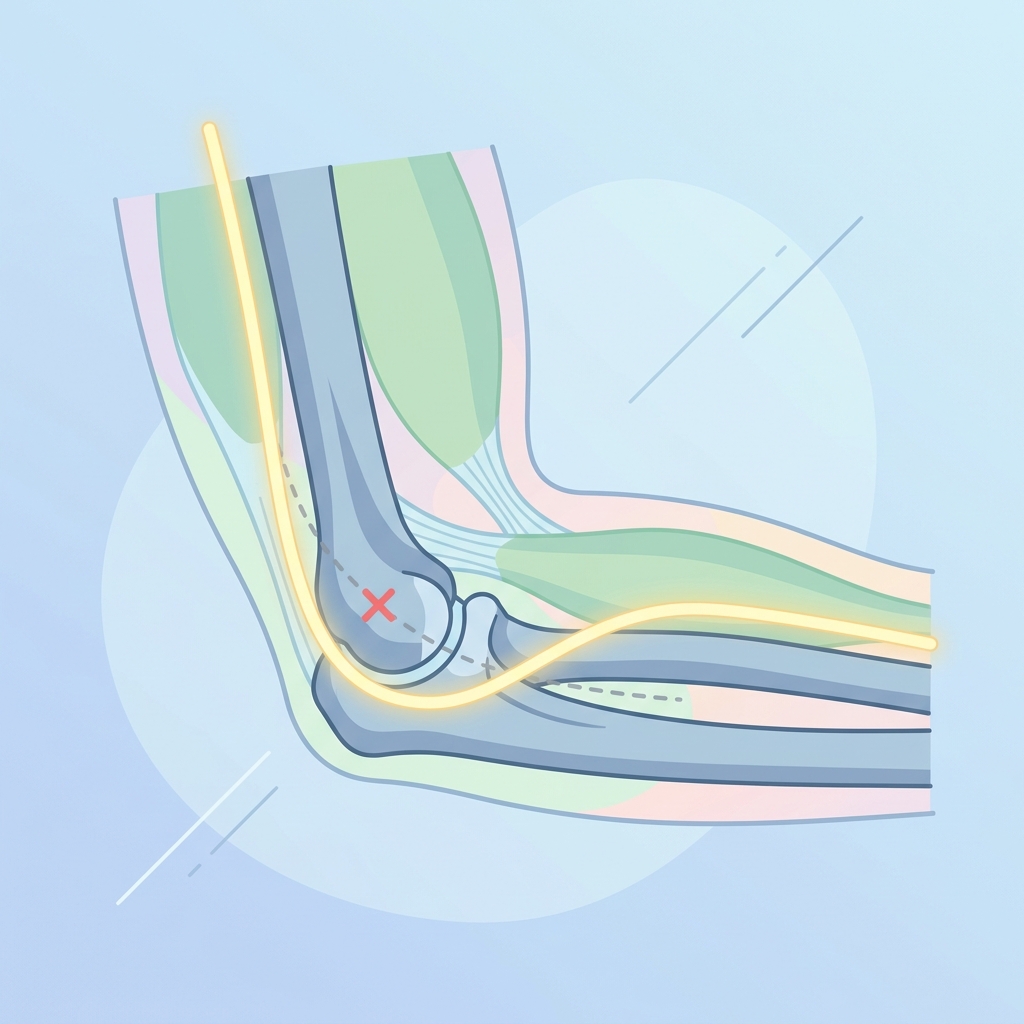
Ulnar Nerve Transposition (Anterior): Moving the nerve to a subcutaneous position
Get Clear, Concise Answers to Your Top Questions About Ulnar Nerve Transposition (Anterior)
Q1. What is anterior subcutaneous ulnar nerve transposition?
Anterior subcutaneous ulnar nerve transposition is a surgical procedure where the ulnar nerve (the "funny bone" nerve) is moved from its natural tunnel behind the elbow to a new position in front of the elbow, just beneath the skin (subcutaneous layer). This helps relieve pressure, tension, and irritation on the nerve.
Q2. Why is my ulnar nerve being moved to a subcutaneous position?
When the ulnar nerve is compressed, stretched, or slips out of place (subluxation) behind the elbow, it causes pain, numbness, and weakness. Moving the nerve in front of the elbow creates a shorter, straighter path, reducing tension on the nerve when you bend your elbow. Placing it subcutaneously (under the skin) provides a safe, tension-free environment for the nerve to heal.
Q3. How is this procedure different from a simple ulnar nerve release (in situ decompression)?
In a simple ulnar nerve release (in situ decompression), the roof of the tunnel is opened to relieve pressure, but the nerve is left in its original place. In an anterior transposition, the nerve is completely freed and moved to a new home in front of the elbow. Transposition is often recommended if the nerve is unstable, if there is significant scarring, or if your elbow anatomy puts extra stretch on the nerve.
Q4. What are the main symptoms that this surgery is designed to treat?
The surgery aims to resolve symptoms of cubital tunnel syndrome, which include:
- Numbness and tingling in the ring and pinky fingers.
- Pain along the inner side of the elbow and forearm.
- A "pins and needles" sensation, especially when the elbow is bent.
- Hand weakness, clumsiness, or difficulty with fine motor tasks like buttoning a shirt.
Q5. How should I prepare for my ulnar nerve transposition surgery?
Dr. Veillette's team will provide detailed pre-operative instructions. Typically, this includes:
- Fasting (no food or drink) after midnight before your surgery.
- Discussing all your current medications, especially blood thinners, and stopping them if advised.
- Arranging for a family member or friend to drive you home and stay with you for the first 24 hours.
- Wearing loose-fitting clothing with wide sleeves that can fit over a bulky dressing or splint.
Q6. What type of anesthesia is used during the operation?
The surgery is typically performed under general anesthesia (where you sleep) or regional anesthesia (a nerve block that numbs your entire arm, combined with sedation to keep you relaxed). Dr. Veillette and the anesthesia team will discuss the best option for your health and comfort.
Q7. What happens during the surgery itself?
During the procedure:
- An incision is made along the inner side of your elbow.
- The ulnar nerve is carefully identified and freed from surrounding tissue and the tight fibrous band of the cubital tunnel.
- The nerve is gently relocated to its new position in front of the elbow, just under the skin.
- Small tissue structures (fascial slings) may be created to keep the nerve from sliding back into its old position.
- The incision is closed with sutures and covered with a clean, bulky sterile bandage.
Q8. Will I need to wear a brace, splint, or sling after surgery, and for how long?
Yes, you will typically be placed in a bulky dressing and a soft splint or sling immediately after surgery. This keeps your elbow slightly bent (usually at a comfortable 90-degree angle) to protect the nerve while the tissue heals. You will wear this splint for about 10 to 14 days until your first follow-up appointment.
Q9. How can I safely sleep and position my arm after the procedure?
For the first few weeks:
- Sleep on your back or on the opposite side of your body.
- Support your surgical arm on pillows so it is elevated above the level of your heart. This significantly helps reduce swelling and throbbing.
- Keep the splint clean and dry, and do not sleep directly on the operated arm.
Q10. When can I return to daily activities, driving, and work?
Recovery timelines vary:
- Light daily activities: You can use your hand for light activities (like typing or eating) within a few days, keeping your elbow supported.
- Driving: You should not drive while taking prescription pain medications or while wearing a restrictive splint (typically 1 to 2 weeks).
- Work: If you have a desk job, you may return in 1 to 2 weeks. For manual labor or heavy lifting, it can take 6 to 12 weeks.
Q11. What is the role of physical therapy in my recovery?
Physical therapy is vital for restoring motion and strength. Once your splint is removed (typically around 10 to 14 days):
- You will begin gentle range-of-motion exercises to prevent stiffness.
- You will learn nerve-gliding exercises to keep the nerve moving smoothly in its new position.
- Gradually, you will progress to strengthening exercises for your hand, wrist, and arm.
Q12. What are the common risks or potential complications of this surgery?
While generally very safe, potential risks include:
- Temporary or persistent numbness or tingling as the nerve slowly heals.
- Elbow stiffness or a minor loss of full extension.
- Wound healing issues or infection.
- Tenderness or hypersensitivity around the scar.
- Injury to the nerve itself (rare).
Q13. How much pain should I expect, and how will it be managed?
Moderate pain and soreness are normal for the first few days. Dr. Veillette will prescribe pain medication to help manage this. As the pain decreases, you can transition to over-the-counter pain relievers like acetaminophen or ibuprofen. Applying ice packs over your dressing (keeping it dry) can also help.
Q14. What are the signs of infection or other issues that require contacting Dr. Veillette's office?
Contact Dr. Veillette's office immediately if you notice:
- Redness, swelling, or warmth around the incision that gets worse.
- Drainage or pus coming from the bandage.
- A sudden increase in severe pain that is not relieved by medication.
- A fever above 101°F (38.3°C).
- Increased numbness, tingling, or weakness in your hand.
Q15. What are the long-term outcomes and success rates for anterior ulnar nerve transposition?
The long-term success rate is high, with most patients experiencing significant relief from numbness, pain, and tingling. However, nerves heal very slowly (about 1 millimeter per day). It may take several months to a year to feel the full benefits, especially if the nerve was severely compressed before surgery.
We encourage you to write down any specific questions you have and discuss them thoroughly with your surgeon, doctor, or physical therapist. They are your best resource for personalized advice and care.
Disclaimer: This brochure provides general information and is not a substitute for professional medical advice. Always consult your doctor or qualified healthcare provider with any questions you may have regarding your specific medical condition and treatment plan.

Related articles
Browse all articlesTrusted External Resources
Curated educational materials to help you make informed decisions about your orthopaedic bone & joint conditions.

Orthopaedia
Orthogate Patient Education