
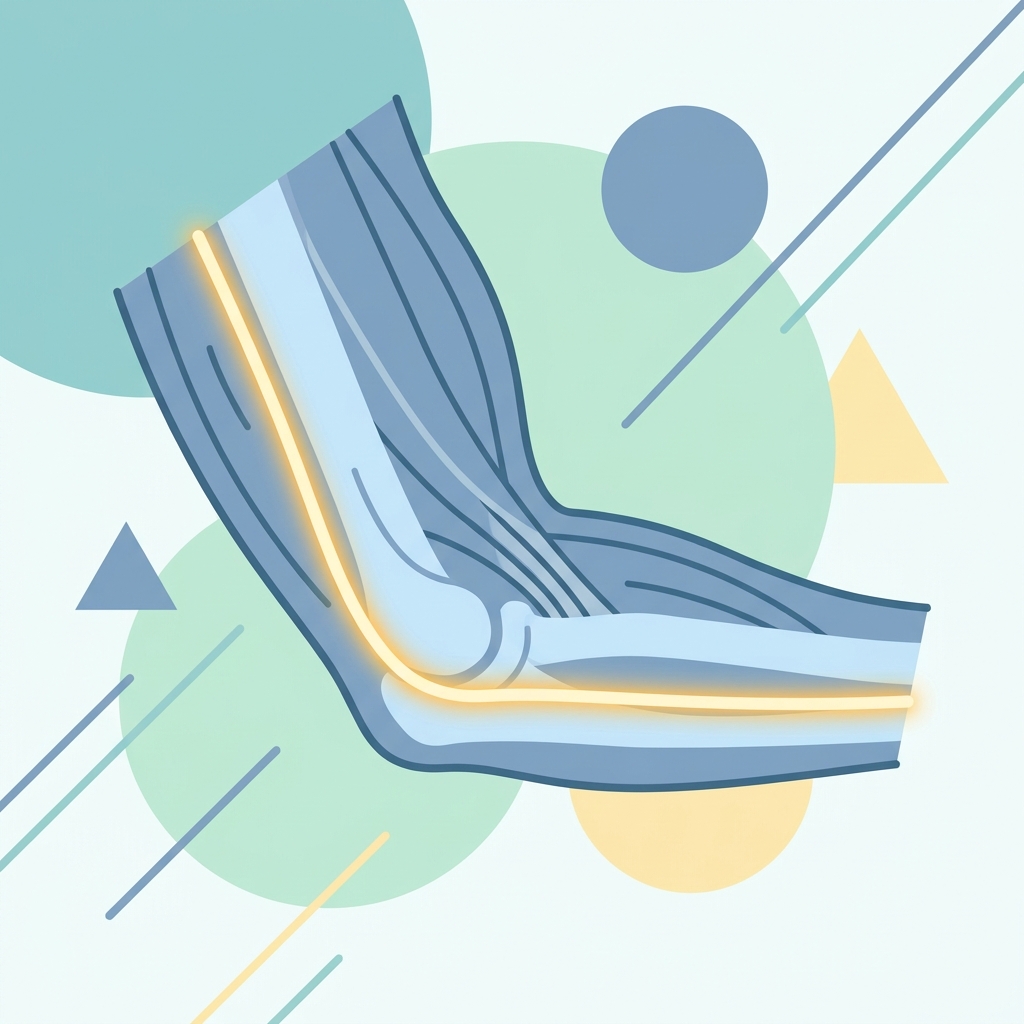
Ulnar Nerve Decompression Protocol (In Situ Release)
Phase-by-phase post-operative rehabilitation protocol for ulnar nerve decompression (in situ release) to guide recovery and physical therapy.
In situ decompression of the ulnar nerve at the cubital tunnel involves releasing the tight fascial structures (such as Osborne's ligament) that compress the nerve, without transposing (moving) the nerve from its natural anatomical groove. The primary rehabilitation focus after an in situ release is to promote early, gentle nerve gliding to prevent adhesions, restore normal elbow and forearm motion, and protect the healing surgical site from excessive tension or direct pressure.
Phase I: Immediate Post-Operative (Weeks 0-2)
Goals:
- Protect the surgical incision and promote healing.
- Control pain, inflammation, and local swelling.
- Maintain active range of motion of the shoulder, wrist, and hand.
- Initiate early, gentle range of motion of the elbow and forearm to prevent nerve adherence.
Precautions & Restrictions:
- Avoid prolonged, sustained elbow flexion (greater than 90 degrees), especially when sleeping. Consider a soft night splint if helpful.
- Do not apply direct pressure on the incision site or medial side of the elbow.
- Strict lifting restriction of under 2 pounds (e.g., cup of water).
- Avoid sudden, jerky, or forceful elbow movements.
Suggested Exercises:
- Active-assisted and active range of motion (AROM) of the elbow and forearm within a pain-free, comfortable range.
- Active range of motion of the wrist and hand (finger flexion/extension, wrist flexor/extensor stretches).
- Early, gentle ulnar nerve gliding (e.g., wrist flexion with elbow flexion, wrist extension with elbow extension) performed slowly and without eliciting numbness or tingling.
- Shoulder active range of motion (elevation, abduction) to maintain proximal mobility.
Criteria to Progress:
- Completely healed incision with no signs of infection.
- Elbow pain and swelling are stable and managed.
- Demonstrated ability to perform gentle elbow range of motion without exacerbating nerve symptoms.
Phase II: Intermediate Rehabilitation & Nerve Gliding (Weeks 2-6)
Goals:
- Restore full active and passive range of motion of the elbow and forearm.
- Optimize ulnar nerve mobility and glide through the cubital tunnel.
- Control residual edema and initiate scar tissue management.
- Reintroduce light, non-resistive activities of daily living.
Precautions & Restrictions:
- Avoid positions that place maximum tension on the ulnar nerve (e.g., combined full elbow flexion, shoulder abduction, and wrist/finger extension) if they produce tingling or paresthesia.
- Do not lift objects heavier than 5 to 10 pounds.
- Avoid resting the elbow on hard surfaces to prevent direct mechanical compression of the nerve.
Suggested Exercises:
- Progressive elbow active and passive range of motion to achieve full extension and flexion.
- Active ulnar nerve gliding and sliding exercises, slowly increasing range of motion and hold times as tolerated.
- Scar tissue mobilization/massage over the healed incision to prevent subcutaneous tethering.
- Light forearm and wrist isometrics, progressing to light resistance band exercises for the wrist and grip strengthening.
- Core and scapular stabilization exercises.
Criteria to Progress:
- Full, pain-free active elbow and forearm range of motion.
- Tolerance to nerve gliding exercises without residual or latent nerve irritation.
- Satisfactory scar mobility.
Phase III: Strengthening & Functional Recovery (Weeks 6+)
Goals:
- Restore normal strength, power, and muscular endurance of the upper extremity.
- Gradually return to all work, recreational, and athletic activities.
- Maintain long-term ulnar nerve mobility and health.
Precautions & Restrictions:
- Gradually introduce heavy loads; avoid sudden, unconditioned lifting in deep elbow flexion.
- Monitor for any recurrence of ulnar nerve symptoms (paresthesia, numbness, or weakness) and modify intensity if they occur.
Suggested Exercises:
- Progressive resistive exercises (PREs) for elbow flexion/extension, pronation/supination, wrist flexion/extension, and hand grip.
- Upper body strengthening (shoulder press, rows, chest press) progressing from light to normal resistance.
- Advanced nerve gliding and functional mobility drills tailored to the patient's job or sport.
- Simulated functional, occupational, or sport-specific tasks.
Criteria to Progress:
- Full active range of motion without discomfort or neurological symptoms.
- Elbow and forearm strength at least 90% of the contralateral side.
- Successful, symptom-free return to full daily work and athletic demands.
These guidelines represent a standard rehabilitation protocol. Individual recovery rates vary significantly depending on the size of the repair, bone/tissue quality, and general patient health. Your surgeon may modify this protocol specifically for you.
Disclaimer: This protocol is for educational purposes and is not a substitute for professional medical advice. Always consult your surgeon or physical therapist before performing any exercises or modifying activity restrictions.

Related articles
Browse all articlesTrusted External Resources
Curated educational materials to help you make informed decisions about your orthopaedic bone & joint conditions.

Orthopaedia
Orthogate Patient Education