
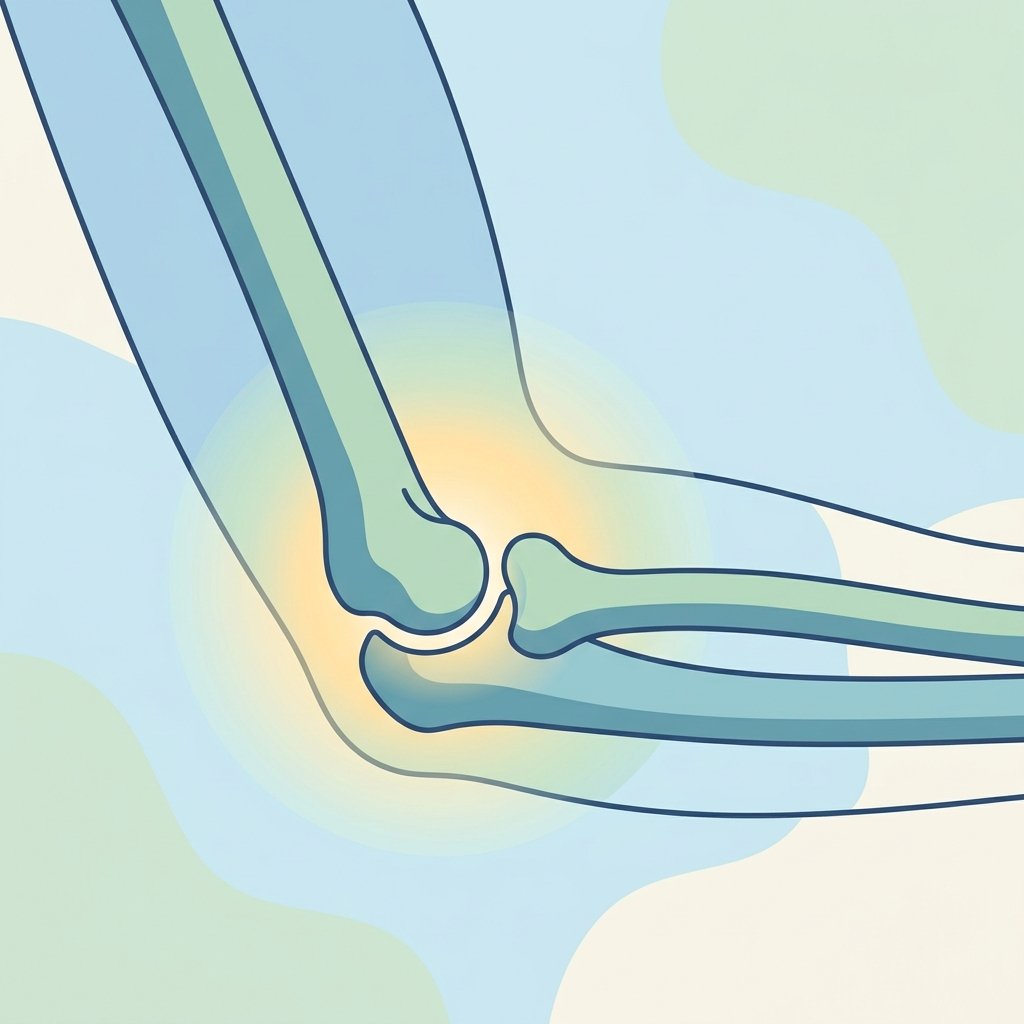
Osteoarthritis of the Elbow
Get Clear, Concise Answers to Your Top Questions About Osteoarthritis of the Elbow
Q1. What is osteoarthritis of the elbow?
Osteoarthritis of the elbow is a condition where the protective cartilage covering the ends of your elbow bones wears down over time. Cartilage acts as a cushion, allowing the joint to move smoothly. When it wears away, the bones begin to rub directly against each other, leading to friction, pain, stiffness, and the growth of bone spurs.
Q2. How common is elbow osteoarthritis compared to arthritis in other joints?
Osteoarthritis of the elbow is relatively uncommon compared to arthritis in weight-bearing joints like the hips or knees. Because the elbow joint does not support your body weight, it is less prone to typical age-related wear. When it does occur, it is usually linked to a history of joint injury, heavy manual labor, or repetitive sports.
Q3. What are the primary causes of elbow osteoarthritis?
The most common causes of elbow osteoarthritis include:
- Previous injury: Past fractures, elbow dislocations, or severe ligament tears can damage cartilage and lead to arthritis years later.
- Repetitive stress: Decades of repetitive elbow movements, such as heavy lifting, throwing, or using vibrating tools.
- Age and wear: Gradual wear of the joint cartilage over time.
- Genetics: A family history of osteoarthritis or joint instability.
Q4. What symptoms should I look out for?
Common symptoms of elbow osteoarthritis include:
- Pain: Dull, aching pain in the joint, especially when bending, straightening, or rotating your arm.
- Stiffness: Difficulty fully straightening or bending your elbow, which is often worse in the morning.
- Locking or catching: A sensation of the joint catching or getting stuck, often caused by loose pieces of cartilage or bone.
- Swelling: Fluid buildup in the joint due to inflammation.
- Numbness or tingling: In later stages, swelling or bone spurs can pinch the ulnar nerve (the "funny bone" nerve), causing tingling in your ring and pinky fingers.
Q5. How is osteoarthritis of the elbow diagnosed?
To diagnose elbow osteoarthritis, your doctor will:
- Perform a thorough physical exam to check your elbow's range of motion, stability, and areas of tenderness.
- Order standard elbow X-rays, which can reveal narrowing of the space between the bones (indicating lost cartilage) and the presence of bone spurs (osteophytes).
- Sometimes recommend an MRI or CT scan if they need to look for loose bodies or assess the joint structure in greater detail.
Q6. Who is most at risk for developing this condition?
Those at highest risk include:
- Manual laborers who perform heavy lifting, pushing, or pulling daily.
- Athletes involved in throwing sports (like baseball pitchers) or racquet sports.
- Individuals with a history of elbow trauma or fractures.
- People over the age of 50, as joint wear naturally increases with age.
Q7. Can I prevent osteoarthritis of the elbow?
While you cannot always prevent arthritis, you can lower your risk by:
- Using proper technique and body mechanics during sports and heavy lifting.
- Wearing protective gear during high-impact activities to avoid joint injuries.
- Giving your elbow adequate rest if you perform repetitive tasks.
- Seeking prompt medical attention for elbow injuries to ensure they heal correctly.
Q8. What non-surgical treatments are available?
Most patients start with conservative treatments to manage symptoms. These include:
- Activity modification: Avoiding activities that trigger elbow pain, such as heavy lifting or repetitive throwing.
- Physical therapy: Gentle exercises to maintain joint flexibility and strengthen surrounding muscles.
- Medications: Over-the-counter pain relievers or anti-inflammatory drugs (NSAIDs) to reduce pain and swelling.
- Heat and cold therapy: Applying ice packs to reduce swelling or warm compresses to ease stiffness.
Q9. How do joint injections work for elbow arthritis?
If oral medications are not enough, corticosteroid injections (cortisone shots) can be injected directly into the elbow joint. Cortisone is a powerful anti-inflammatory medicine that can temporarily relieve pain and swelling, often lasting for several weeks or months. It does not cure the arthritis, but it can help you participate in physical therapy.
Q10. What exercises can help my elbow osteoarthritis?
Gentle, low-impact exercises are key to keeping your elbow moving. These include:
- Gentle stretching: Safely bending and straightening the elbow to preserve range of motion.
- Forearm rotations: Slowly turning your palm up and down.
- Strengthening exercises: Soft squeezing exercises or light resistance training for the forearm and upper arm muscles to support the joint. Always consult a physical therapist before starting a new routine.
Q11. When is surgery considered for elbow osteoarthritis?
Surgery is typically considered only when:
- Conservative treatments (therapy, medication, injections) no longer provide relief.
- Persistent elbow pain interferes with your sleep and daily activities.
- You experience severe loss of range of motion or ulnar nerve symptoms (like hand weakness or constant tingling).
Q12. What are the surgical options for this condition?
Depending on the severity of your arthritis, surgical options include:
- Elbow Arthroscopy: A minimally invasive procedure to clean out bone spurs and loose fragments.
- Ulnohumeral Arthroplasty: A procedure to remove bone spurs blocking the joint's movement.
- Total Elbow Arthroplasty (Elbow Replacement): Replacing the damaged joint surfaces with artificial metal and plastic components, usually reserved for severe cases in older patients.
Q13. What happens during an elbow debridement (arthroscopy)?
Elbow arthroscopy is a keyhole surgery performed through small incisions. The surgeon inserts a tiny camera (arthroscope) and miniature instruments into the joint. They remove loose cartilage fragments, shave down painful bone spurs that block motion, and remove inflamed tissue. This helps reduce catching and pain while restoring some movement.
Q14. What is the typical recovery timeline after elbow surgery?
Your recovery timeline depends on the procedure:
- After arthroscopy: You can usually start gentle motion immediately. Pain and swelling improve over 4 to 6 weeks, and full recovery takes about 2 to 3 months.
- After joint replacement: Physical therapy starts early but is more gradual. Healing takes 3 to 6 months, and patients must adhere to lifelong lifting restrictions (typically 5 to 10 pounds) to protect the new joint.
Q15. What is the long-term outlook for someone with elbow osteoarthritis?
The long-term outlook is generally very positive. With appropriate non-surgical management, many patients can control their pain and maintain functional mobility. For those who require surgery, procedures like arthroscopic debridement or joint replacement are highly successful at reducing pain and helping patients return to comfortable daily living.
We encourage you to write down any specific questions you have and discuss them thoroughly with your surgeon, doctor, or physical therapist. They are your best resource for personalized advice and care.
Disclaimer: This brochure provides general information and is not a substitute for professional medical advice. Always consult your doctor or qualified healthcare provider with any questions you may have regarding your specific medical condition and treatment plan.

Related articles
Browse all articlesTrusted External Resources
Curated educational materials to help you make informed decisions about your orthopaedic bone & joint conditions.

Orthopaedia
Orthogate Patient Education