
Low-Grade Ulnar Collateral Ligament (UCL) Strain Exercises
Step-by-step home exercise guide for Low-Grade Ulnar Collateral Ligament (UCL) Strain to improve mobility, strength, and recovery.
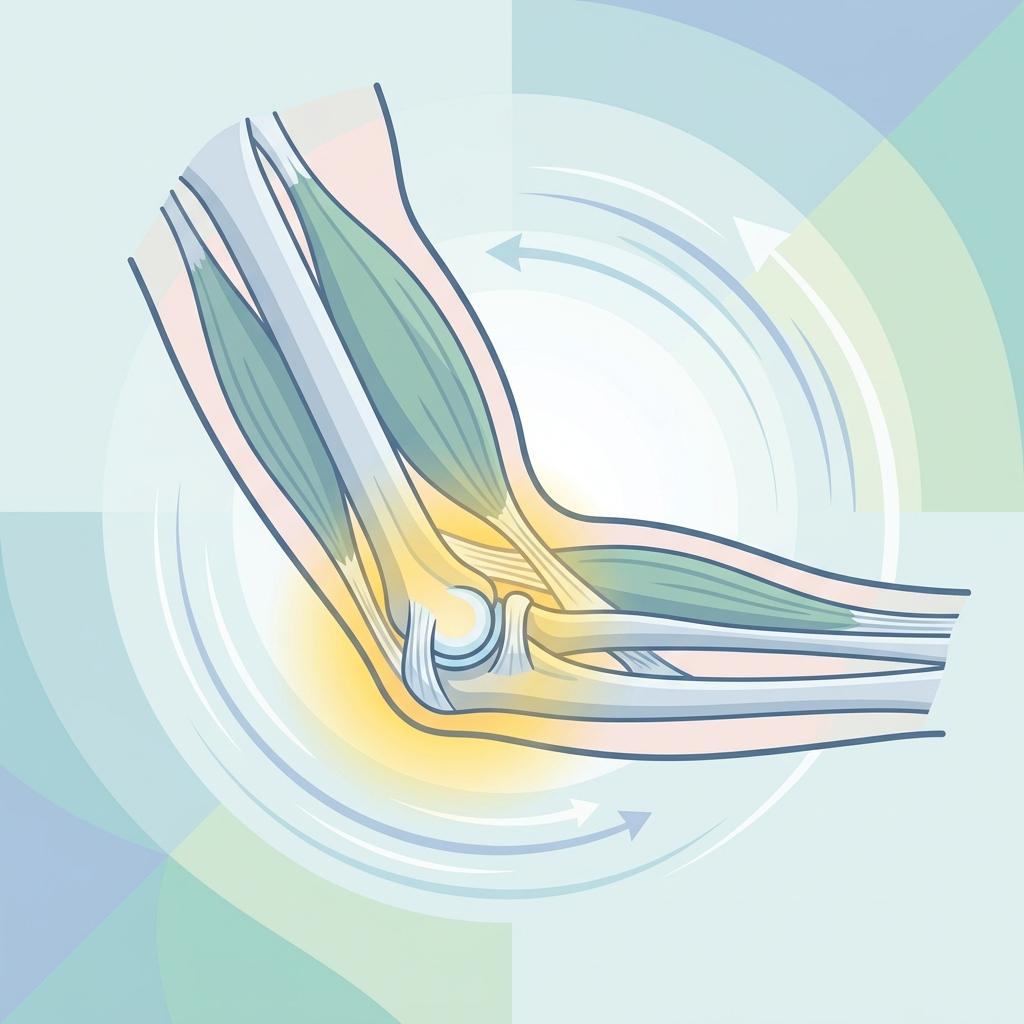
Rehabilitating a low-grade Ulnar Collateral Ligament (UCL) strain focuses on protecting the ligament while progressively restoring pain-free movement and strengthening the surrounding muscles. The ulnar collateral ligament is located on the inner (medial) side of the elbow and provides critical stability, especially during throwing and overhead motions. A structured home exercise program helps rebuild support for the joint, improves tissue flexibility, and prevents future injury.
General Guidelines & Safety Precautions
Before beginning your exercises, keep the following safety guidelines in mind:
- Warm-up: Warm up the elbow area by placing a warm compress on it for 5-10 minutes, or by gently moving the arm through a comfortable range of motion before starting the strengthening exercises.
- Pain Rule: Exercises should never cause sharp or increasing pain. You may feel a mild stretch or muscle fatigue, but if you experience pain at the inner elbow, stop immediately.
- Control: Perform all movements in a slow, controlled manner. Avoid sudden jerking or rapid movements.
Targeted Exercises
Exercise 1: Pain-Free Elbow Range of Motion
Purpose: Maintain elbow mobility, prevent joint stiffness, and promote healthy blood circulation to the healing ligament without placing stress on the medial side of the joint.
Equipment Needed: None (a flat surface like a table can be used for arm support).
Starting Position: Sit comfortably in a chair with your forearm resting flat on a table, palm facing up.
Instructions:
- Slowly bend your elbow, bringing your hand up toward your shoulder. Go only as far as is comfortable and pain-free.
- Hold the bent position for 2 seconds.
- Slowly and gently straighten your elbow back down toward the table. Stop when you feel a light stretch or reach your pain-free limit.
- Repeat for the recommended number of repetitions.
Dosage: Perform 2 sets of 10 repetitions, 2 times per day.
Tips & Mistakes to Avoid: Keep your movements slow and controlled. Never force the elbow into sharp pain. If you cannot straighten or bend the arm fully, stay within your comfortable, pain-free range.
Exercise 2: Forearm Pronation (Dynamic Stabilization)
Purpose: Strengthen the flexor-pronator muscle mass on the inner side of your forearm. These muscles act as dynamic stabilizers, actively supporting and protecting the ulnar collateral ligament (UCL) during arm movement.
Equipment Needed: A lightweight hammer, a kitchen spatula, or a very light dumbbell (1 to 2 pounds).
Starting Position: Sit next to a table. Rest your forearm on the table with your elbow bent to 90 degrees and your wrist extending slightly over the edge. Hold the bottom of the hammer handle (or spatula) with your hand so the weighted end points straight up toward the ceiling.
Instructions:
- Slowly rotate your forearm inward (pronating) so your palm faces down toward the floor, controlling the rotation as the hammer head moves toward the midline.
- Hold this position for 2 seconds.
- Slowly rotate your forearm back to the starting upright position.
- Repeat for the set number of repetitions.
Dosage: Perform 2 sets of 10 to 15 repetitions, 1 time per day.
Tips & Mistakes to Avoid: Do not let the hammer swing or drop quickly; focus on a slow, controlled descent and ascent. If the exercise feels too difficult, choke up (slide your hand higher) on the handle to reduce the resistance.
Exercise 3: Isometric Wrist Flexion
Purpose: Safely activate and strengthen the wrist flexor tendons near the inner elbow without moving the joint or putting stress on the healing UCL.
Equipment Needed: None.
Starting Position: Sit upright and rest your injured forearm on a table or your thigh, with your palm facing up.
Instructions:
- Place your opposite (non-injured) hand across the palm of your injured hand.
- Gently try to bend your injured wrist upward (flexion) while using your opposite hand to press down and resist all movement.
- Press hard enough to contract the forearm muscles, but keep the wrist completely still (no actual movement should occur).
- Hold the contraction for 5 to 7 seconds, then slowly relax.
Dosage: Perform 2 sets of 5 to 10 repetitions, 1 time per day.
Tips & Mistakes to Avoid: The contraction should be completely pain-free. If you feel pain at the inner elbow, reduce the intensity of your upward push. Keep your shoulder relaxed throughout the exercise.
Exercise 4: Gentle Grip Strengthening
Purpose: Activate the forearm muscles and promote blood flow to the elbow region to facilitate healing and improve grip endurance.
Equipment Needed: A soft foam ball, tennis ball, or soft therapy putty.
Starting Position: Sit or stand comfortably, holding the soft ball in the hand of your injured arm.
Instructions:
- Squeeze the ball gently using your fingers and thumb.
- Hold the squeeze for 3 to 5 seconds.
- Slowly and completely release your grip.
- Repeat for the recommended repetitions.
Dosage: Perform 2 sets of 10 to 15 repetitions, 1 time per day.
Tips & Mistakes to Avoid: Avoid squeezing with maximum effort, as this can irritate the inner elbow. Squeeze only hard enough to feel the muscles engage without producing any pain.
Always consult with your physical therapist or doctor before starting a new exercise routine. If any exercise causes persistent pain or swelling, discontinue it and contact your healthcare provider.
Disclaimer: This guide provides general exercise instructions and is not a substitute for professional medical advice. Always consult your doctor or qualified healthcare provider with any questions you may have regarding your specific medical condition and treatment plan.

Related articles
Browse all articlesTrusted External Resources
Curated educational materials to help you make informed decisions about your orthopaedic bone & joint conditions.

Orthopaedia
Orthogate Patient Education