
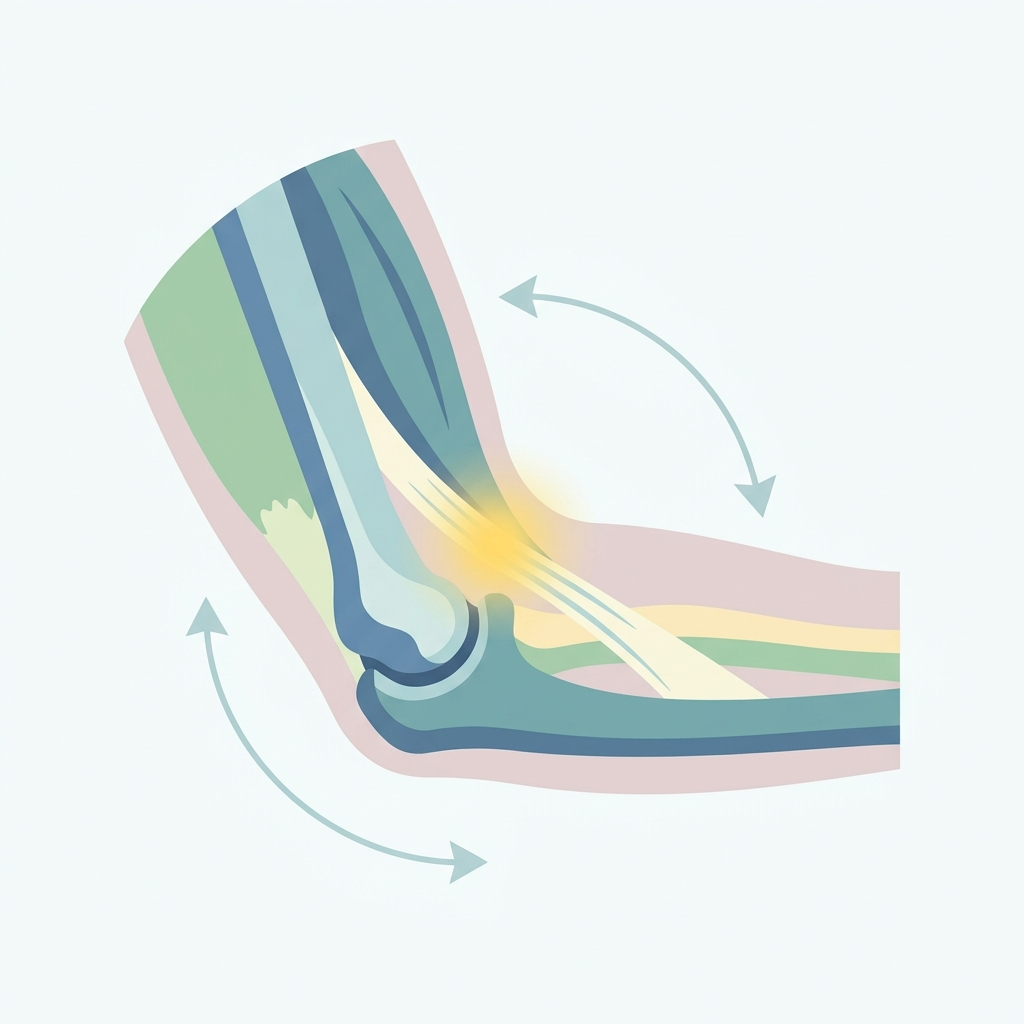
Eccentric Loading Protocols: Therapeutic exercise for tendon remodeling
Get Clear, Concise Answers to Your Top Questions About Eccentric Loading Protocols for Tendon Remodeling
Q1. What is an eccentric loading protocol for the elbow?
An eccentric loading protocol is a structured physical therapy exercise program focused on strengthening elbow tendons while they are lengthening. It is one of the most effective non-surgical treatments for chronic tendon pain (tendinopathy) in the elbow, such as tennis elbow or golfer's elbow.
Q2. What does "eccentric" mean in exercise?
In exercise, "eccentric" refers to the phase where a muscle or tendon is lengthening under tension, such as slowly lowering a hand weight. This is the opposite of a "concentric" contraction, where the muscle shortens, such as lifting the weight. Eccentric movements put controlled stress on the tendon, prompting it to heal and rebuild.
Q3. How does eccentric loading help remodel a damaged elbow tendon?
Damaged tendons often have disorganized collagen fibers, which make them weak and painful. Eccentric exercise acts as a mechanical signal that tells your body to lay down new, healthy collagen in a neat, organized pattern. This process, called tendon remodeling, restores the tendon's strength, elasticity, and load-bearing capacity.
Q4. For what elbow conditions are eccentric protocols recommended?
Eccentric loading protocols are primarily recommended for chronic tendon issues, including:
- Tennis Elbow (Lateral Epicondylitis): Chronic irritation and micro-tearing of the tendons on the outside of the elbow.
- Golfer's Elbow (Medial Epicondylitis): Chronic pain and inflammation affecting the tendons on the inside of the elbow.
- Triceps Tendinopathy: Pain and weakness in the triceps tendon at the back of the elbow.
Q5. Why is eccentric training preferred over standard strengthening exercises?
Traditional strengthening exercises focus on both lifting and lowering. Research shows that focusing specifically on the controlled lowering (eccentric) phase applies a unique, therapeutic tension to the tendon without overloading it. This encourages structural rebuilding and reduces pain more effectively than general strengthening.
Q6. Will these exercises cause pain while I am doing them?
Yes, it is common and acceptable to feel a mild, manageable ache during eccentric exercises. On a pain scale of 0 to 10, your discomfort should stay below a 3 or 4. If the pain becomes sharp, severe, or lingers into the next day, the exercise intensity is too high and should be reduced.
Q7. What is a typical eccentric exercise for Tennis Elbow?
A common exercise is the wrist-extension eccentric drop:
- Sit with your forearm supported on a table, wrist hanging over the edge, holding a light weight.
- Use your healthy hand to lift the weight up (concentric phase).
- Remove your healthy hand, and slowly lower the weight using only the injured arm over a slow count of 3 to 5 seconds (eccentric phase).
- Repeat as prescribed by your therapist.
Q8. What is a typical eccentric exercise for Golfer's Elbow?
A common exercise is the wrist-flexion eccentric drop:
- Sit with your forearm supported, palm facing up, wrist over the edge, holding a light weight.
- Use your healthy hand to lift the wrist up (concentric phase).
- Remove the healthy hand, and slowly lower the weight down over a slow 3 to 5 seconds (eccentric phase).
- Repeat as prescribed by your therapist.
Q9. How many repetitions and sets should I perform daily?
A standard starting protocol consists of 3 sets of 15 repetitions, performed once or twice daily. You should start with a very light weight (like 1 to 2 pounds) or even just the weight of your hand, gradually increasing the resistance as your tendon adapts.
Q10. How long does it take for eccentric exercises to work?
Tendon remodeling is a slow biological process. You may begin to notice minor pain relief within 4 to 6 weeks, but significant improvements in tendon strength and tissue structure typically take 12 weeks (3 months) or longer of consistent daily exercise.
Q11. Can I perform these exercises at home, or do I need physical therapy?
You can perform these exercises at home, but we strongly recommend starting with a licensed physical therapist. They can teach you the correct form, ensure you are using the right amount of resistance, and adjust your routine if you experience a flare-up.
Q12. Should I use ice or heat after doing eccentric exercises?
If your elbow feels achy or sore after your exercises, applying an ice pack for 10 to 15 minutes can help soothe the irritation. Avoid using heat if you have active, acute inflammation, but mild warmth before starting can help warm up the muscles.
Q13. Are there any risks or side effects associated with eccentric loading?
The primary risk is temporary soreness or a flare-up if you progress the weight too quickly or use poor form. If you experience persistent, worsening pain that prevents you from performing daily activities, you should rest and consult your healthcare provider.
Q14. Can I continue my regular sports or activities while on this protocol?
You may need to temporarily modify or reduce activities that place high stress on your elbow, such as heavy lifting, racquet sports, or repetitive typing. Your physical therapist will help you determine which activities are safe to continue and how to gradually return to full activity.
Q15. What should I do if my elbow pain doesn't improve after several months?
If you show no improvement after 3 months of consistent eccentric exercises, consult Dr. Veillette or your physician. We may recommend further imaging (such as an ultrasound or MRI) or explore other non-surgical options like platelet-rich plasma (PRP) therapy, bracing, or, in rare cases, surgical intervention.
We encourage you to write down any specific questions you have and discuss them thoroughly with your surgeon, doctor, or physical therapist. They are your best resource for personalized advice and care.
Disclaimer: This brochure provides general information and is not a substitute for professional medical advice. Always consult your doctor or qualified healthcare provider with any questions you may have regarding your specific medical condition and treatment plan.

Related articles
Browse all articlesTrusted External Resources
Curated educational materials to help you make informed decisions about your orthopaedic bone & joint conditions.

Orthopaedia

Orthogate Patient Education