
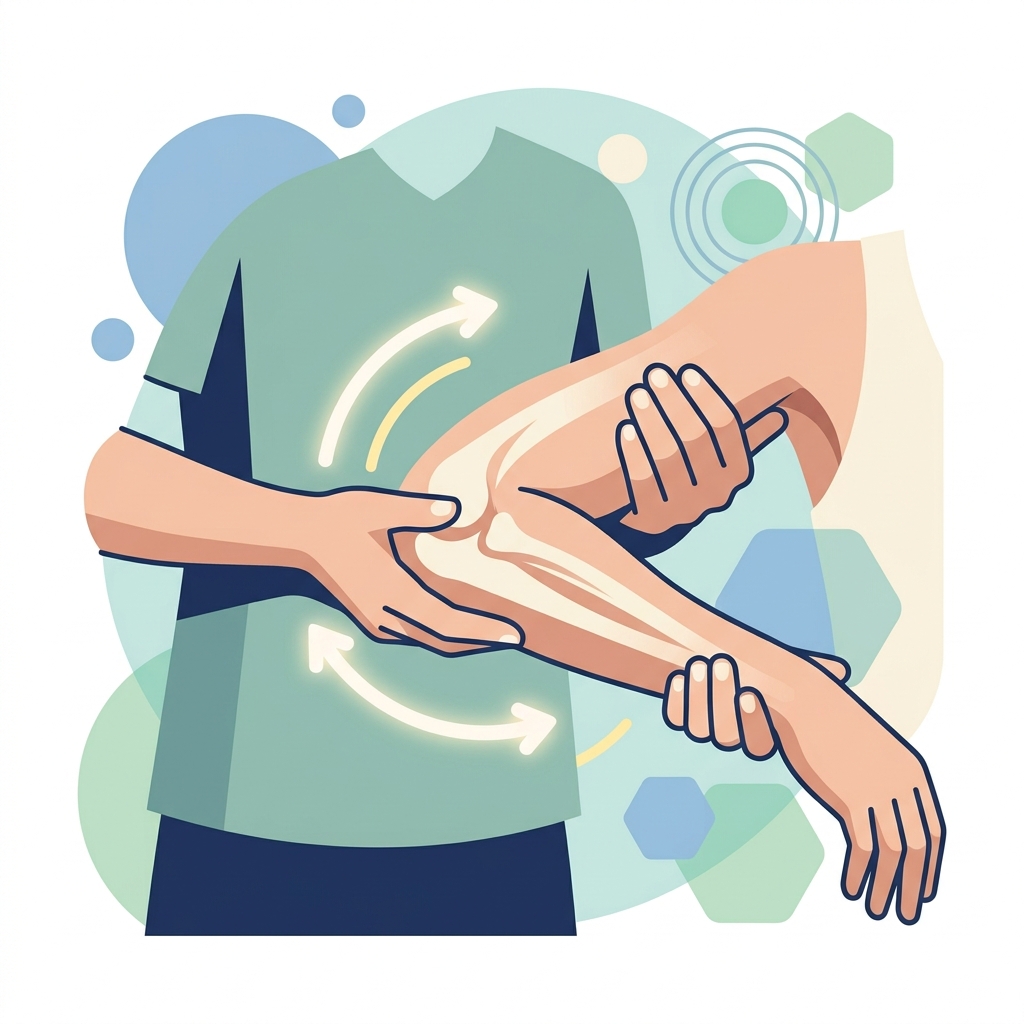
Manual Therapy & Mobilization: Restoration of accessory joint motion and soft tissue compliance
Get Clear, Concise Answers to Your Top Questions About Manual Therapy and Mobilization for the Elbow
Q1. What is manual therapy and joint mobilization for the elbow?
Manual therapy is a specialized hands-on treatment performed by a skilled healthcare provider, such as a physical therapist. Unlike active exercises where you move your arm yourself, manual therapy involves the therapist using their hands to apply precise pressure and movement to your elbow joint and the surrounding soft tissues. Joint mobilization is a specific type of manual therapy that involves gentle, repetitive, and passive movements applied to the elbow joint to reduce stiffness, alleviate pain, and restore normal motion.
Q2. What does "accessory joint motion" mean, and why is it important?
When you bend or straighten your elbow, you are performing "physiological motion." However, for these large movements to happen smoothly, the bones inside the joint must perform tiny, involuntary movements like sliding, rolling, and gliding. These tiny movements are called "accessory joint motion." If these micro-movements are restricted due to injury or stiffness, your elbow cannot bend or straighten fully or pain-free. Mobilization targets these small, accessory motions to restore overall arm function.
Q3. What is "soft tissue compliance" and how does it affect my elbow?
Soft tissue compliance refers to the flexibility, elasticity, and responsiveness of the muscles, tendons, ligaments, and fascia (connective tissue) around your elbow. When you have an injury, inflammation, or surgery, these tissues can become tight, scarred, and less compliant. Loss of soft tissue compliance acts like a tight band wrapping around your elbow, restricting your ability to move your arm and increasing pain during daily activities.
Q4. How do manual therapy and mobilization help restore my elbow's movement?
These hands-on techniques work in several ways to improve your elbow's mobility:
- Breaking Down Scar Tissue: Manual pressure helps realign collagen fibers and break down adhesions or scar tissue that restrict movement.
- Improving Lubrication: Passive joint movement stimulates the production of synovial fluid, which lubricates the joint and nourishes the cartilage.
- Reducing Muscle Tension: Hands-on techniques help relax overactive muscles and reduce painful muscle spasms.
- Easing Pain Signals: Gentle joint movement stimulates sensory receptors that block pain signals from reaching your brain, allowing you to move with less discomfort.
Q5. What specific elbow conditions can benefit from manual therapy?
Manual therapy and joint mobilization are commonly used to treat a wide variety of elbow issues, including:
- Elbow Stiffness and Contractures: Restoring motion after immobilization in a cast or splint.
- Tennis Elbow (Lateral Epicondylitis): Easing pain and improving tendon compliance.
- Golfer's Elbow (Medial Epicondylitis): Restoring flexibility to the inner elbow tendons.
- Post-Surgical Recovery: Safely regaining movement after elbow surgery (once tissues have sufficiently healed).
- Arthritis of the Elbow: Managing stiffness and pain associated with joint wear and tear.
Q6. What should I expect during a typical manual therapy or mobilization session?
During a session, your therapist will first assess your elbow's movement and feel for areas of stiffness or tension. You will be positioned comfortably, usually sitting or lying down, with your arm supported. The therapist will then apply hands-on techniques. This may include gentle stretching of the muscles, targeted pressure on tight spots, or small, controlled movements applied directly to the joint bones. The techniques are carefully customized based on your pain level and recovery stage.
Q7. Does manual therapy or elbow mobilization hurt?
Manual therapy should not cause severe or sharp pain. You may feel a stretching sensation, mild discomfort, or a "good hurt" as tight tissues are worked on, but the treatment should always remain tolerable. Your therapist will constantly communicate with you to monitor your comfort. If any technique feels too intense, they can easily adjust the amount of pressure or the angle of movement to keep you comfortable.
Q8. How is manual therapy different from regular stretching or exercise?
Regular stretching and exercise are active movements that you perform yourself to build strength and flexibility. Manual therapy is a passive, hands-on treatment that targets tissues and joint structures you cannot isolate on your own. For example, you cannot actively glide the bones of your elbow joint to restore accessory motion; only a trained therapist can perform these precise micro-movements. Manual therapy prepares your elbow joint and tissues so that your active exercises are more effective and less painful.
Q9. Can I perform elbow joint mobilization on myself at home?
No, you should not attempt to mobilize your own elbow joints. True joint mobilization requires advanced clinical training, precise hand placement, and a thorough understanding of joint anatomy. Attempting to force these micro-movements yourself can lead to joint irritation, ligament damage, or worsening of your condition. However, your therapist will teach you safe self-stretching, soft-tissue massage, and range-of-motion exercises that you can perform at home to maintain the progress made during your sessions.
Q10. How many sessions of manual therapy will I need to see improvement?
The number of sessions depends on the severity of your stiffness, the specific condition, and how quickly your body heals. Some patients experience a noticeable decrease in pain and a slight improvement in motion after just one or two sessions. For more chronic stiffness or post-surgical contractures, it may take 4 to 8 weeks of regular therapy (usually 2 to 3 times per week) combined with a dedicated home exercise program to achieve lasting results.
Q11. Are there any risks or side effects associated with elbow manual therapy?
When performed by a licensed, trained healthcare professional, manual therapy is highly safe. The most common side effects are mild soreness, tenderness, or temporary stiffness in the treated area, which typically resolves within 24 to 48 hours. Applying a cold compress for 10-15 minutes can help soothe any post-treatment soreness. Serious risks, such as joint subluxation or nerve irritation, are extremely rare when techniques are applied correctly.
Q12. Can manual therapy help prevent the need for elbow surgery?
Yes, for many patients, manual therapy is a key component of a successful non-surgical treatment plan. By restoring accessory joint motion, breaking down scar tissue, and improving muscle flexibility, manual therapy can alleviate chronic pain and restore full function. This often allows patients with conditions like tennis elbow, mild joint stiffness, or early arthritis to fully recover without ever needing surgical intervention.
Q13. How does manual therapy fit into a complete rehabilitation program?
Manual therapy is rarely used alone; it is most effective when integrated into a comprehensive rehabilitation plan. Typically, manual therapy is used at the beginning of a session to "loosen up" the joint and soft tissues. Once the joint's movement is optimized and pain is reduced, you will perform active stretching, strengthening exercises, and functional training. This combination helps lock in the range-of-motion gains and builds the strength needed to protect the joint.
Q14. Who is qualified to perform manual therapy and joint mobilization on my elbow?
These techniques should only be performed by licensed healthcare professionals who have undergone specific training in manual therapy. This includes registered physical therapists (PTs), occupational therapists (OTs) who specialize in hand and upper extremity rehabilitation, and certified hand therapists (CHTs). Always ensure your provider has experience treating elbow conditions and is aware of your medical history and any surgical details.
Q15. When should manual therapy or mobilization be avoided (contraindications)?
While highly beneficial, manual therapy is not suitable for everyone. It should be avoided or delayed if you have:
- Acute Fractures: Unhealed bone fractures or unstable joints.
- Active Infection: Infection in the elbow joint or surrounding skin.
- Severe Inflammation: Extremely acute rheumatoid arthritis flare-ups.
- Severe Osteoporosis: Bones that are too fragile to tolerate joint pressure.
- Bone Tumors: Any malignancy in the area.
Your surgeon or therapist will perform a thorough screening to ensure these techniques are safe for your specific situation.
We encourage you to write down any specific questions you have and discuss them thoroughly with your surgeon, doctor, or physical therapist. They are your best resource for personalized advice and care.
Disclaimer: This brochure provides general information and is not a substitute for professional medical advice. Always consult your doctor or qualified healthcare provider with any questions you may have regarding your specific medical condition and treatment plan.

Related articles
Browse all articlesTrusted External Resources
Curated educational materials to help you make informed decisions about your orthopaedic bone & joint conditions.

Orthopaedia
Orthogate Patient Education