Lateral Epicondylitis Release, Open: Nirschl procedure involving excision of angiofibroblastic hyperplasia
Get Clear, Concise Answers to Your Top Questions About Lateral Epicondylitis Release, Open: Nirschl procedure
Q1. What is open lateral epicondylitis release (the Nirschl procedure)?
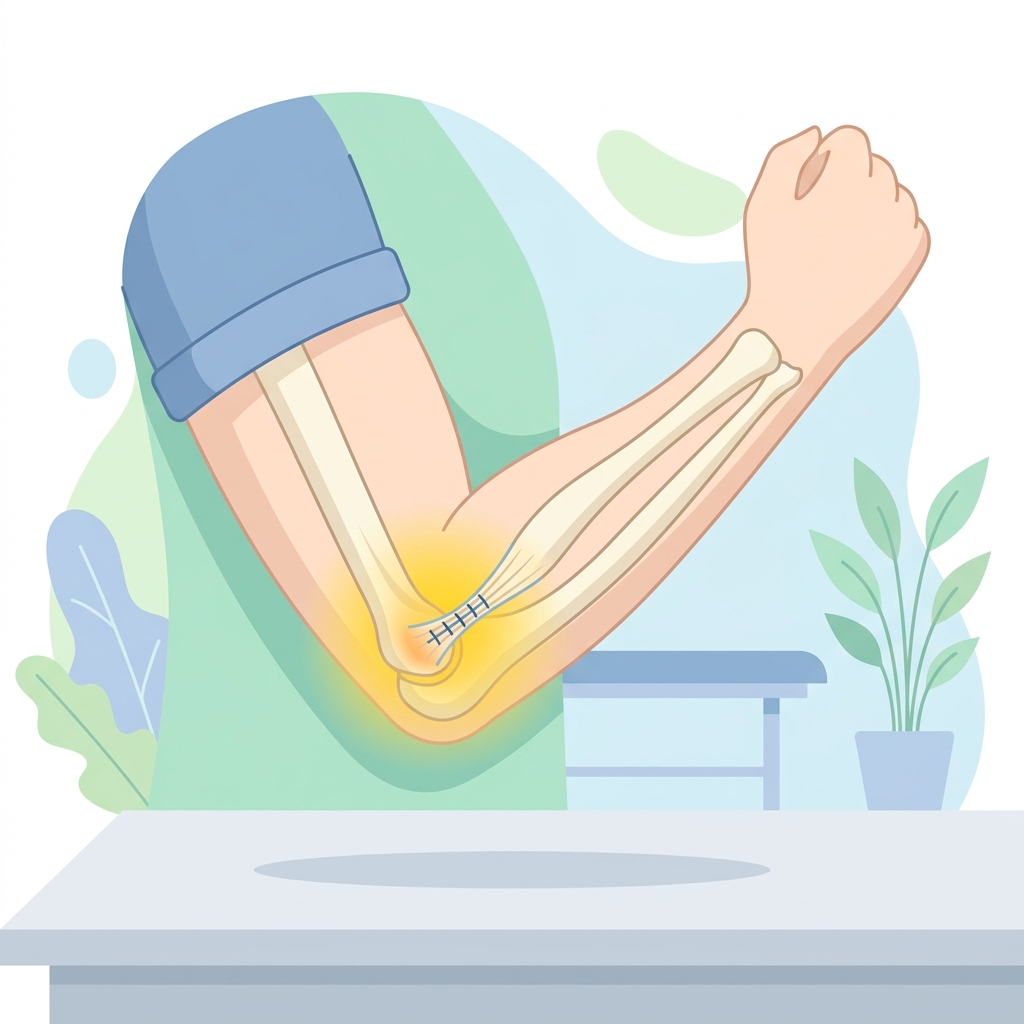
This is a surgery for chronic tennis elbow. Named after Dr. Bernard Nirschl, it involves making a small incision on the outside of the elbow to remove damaged, degenerated tendon tissue and repair the healthy tendon, restoring normal elbow function.
Q2. What is \"angiofibroblastic hyperplasia,\" and why does it need to be removed?
This is abnormal scar tissue that forms when the tendon is repeatedly overloaded and cannot heal. It is weak, causes chronic pain, and cannot function. Removing it allows the body to restart a healthy healing process and form strong, normal tissue.
Q3. When is the Nirschl procedure recommended for tennis elbow?
Surgery is recommended if:
- You have severe elbow pain for at least 6 to 12 months.
- Pain limits your work, daily activities, or sports.
- Treatments like physical therapy, bracing, and injections have failed.
- An MRI confirms significant tendon damage.
Q4. What are the differences between open and arthroscopic lateral epicondylitis release?
Open surgery (Nirschl procedure) uses a small incision directly over the outer elbow, letting the surgeon see and excise the tissue directly. Arthroscopic surgery uses a tiny camera and instruments through buttonhole incisions to clean the tendon from inside the joint. Both have high success rates, and Dr. Veillette will recommend the best one for you.
Q5. How should I prepare for my Nirschl procedure surgery?
You should:
- Complete pre-operative medical testing as requested.
- Stop blood thinners or anti-inflammatories 7-10 days before surgery.
- Fast (no food or drink) starting the night before.
- Arrange for someone to drive you home.
Q6. What type of anesthesia is used during this procedure?
This outpatient surgery uses:
- Regional block: An injection that numbs your entire arm.
- General anesthesia: You are fully asleep.
- Sedation: Combined with a regional block to keep you relaxed.
Q7. What happens during the Nirschl procedure (step-by-step)?
The surgeon:
- Makes a small incision over the outer elbow bump.
- Exposes the underlying degenerated ECRB tendon.
- Removes the damaged tissue (angiofibroblastic hyperplasia).
- Smooths the bone and drills tiny holes to boost healing blood flow.
- Sutures the healthy tendon back together and closes the skin.
Q8. Will I need to wear a splint or brace after the surgery, and for how long?
Yes, you will wear:
- A protective splint for the first week to let the tendon rest.
- A removable brace or sling during the second and third weeks.
- You will gradually phase out the brace by week 3 or 4.
Q9. How much pain should I expect after surgery, and how is it managed?
Moderate pain is expected for a few days. You can manage it by:
- Taking prescribed pain medication for the first 2-3 days.
- Keeping your elbow elevated above your heart.
- Applying ice packs wrapped in a cloth for 15-20 minutes at a time.
Q10. What is the recovery timeline for returning to daily activities and work?
Recovery is gradual:
- Week 1: Rest, pain management, and gentle finger movement.
- Weeks 2-6: Light daily tasks (typing, eating). No lifting over a cup of coffee.
- Weeks 6-12: Return to light work and start light strengthening.
- Months 3-6: Gradual return to sports and heavy activities.
Q11. When can I start physical therapy, and what does it involve?
Therapy starts in the first 1-2 weeks:
- Early weeks: Gentle active range-of-motion exercises.
- Weeks 3-6: Stretching and light functional movements.
- Weeks 6+: Structured forearm strengthening and conditioning.
Q12. How should I sleep and care for my arm immediately after surgery?
Sleep on your back or non-surgical side with your arm propped up on pillows to reduce swelling. Keep the incision clean and dry, covering the splint with plastic while showering. Avoid baths or pools until stitches are out and the skin is fully healed.
Q13. What are the potential risks and complications of open lateral epicondylitis release?
Risks are low but include:
- Infection at the incision site.
- Temporary or permanent nerve injury or numbness.
- Stiffness or difficulty straightening the elbow.
- Persistent pain or failure of the tendon to heal.
Q14. When can I return to sports, heavy lifting, or repetitive arm activities?
You can return to:
- Light jogging or cycling at 4-6 weeks.
- Golf or tennis at 3-4 months.
- Heavy lifting or high-impact sports at 4-6 months, once strength is restored.
Q15. What is the success rate of the Nirschl procedure for chronic tennis elbow?
Success is very high, with 85% to 95% of patients achieving significant pain relief, improved strength, and high satisfaction. Following the rehabilitation program is key to getting the best result.
We encourage you to write down any specific questions you have and discuss them thoroughly with your surgeon, doctor, or physical therapist. They are your best resource for personalized advice and care.
Disclaimer: This brochure provides general information and is not a substitute for professional medical advice. Always consult your doctor or qualified healthcare provider with any questions you may have regarding your specific medical condition and treatment plan.

Related articles
Browse all articlesTrusted External Resources
Curated educational materials to help you make informed decisions about your orthopaedic bone & joint conditions.

Orthopaedia
Orthogate Patient Education